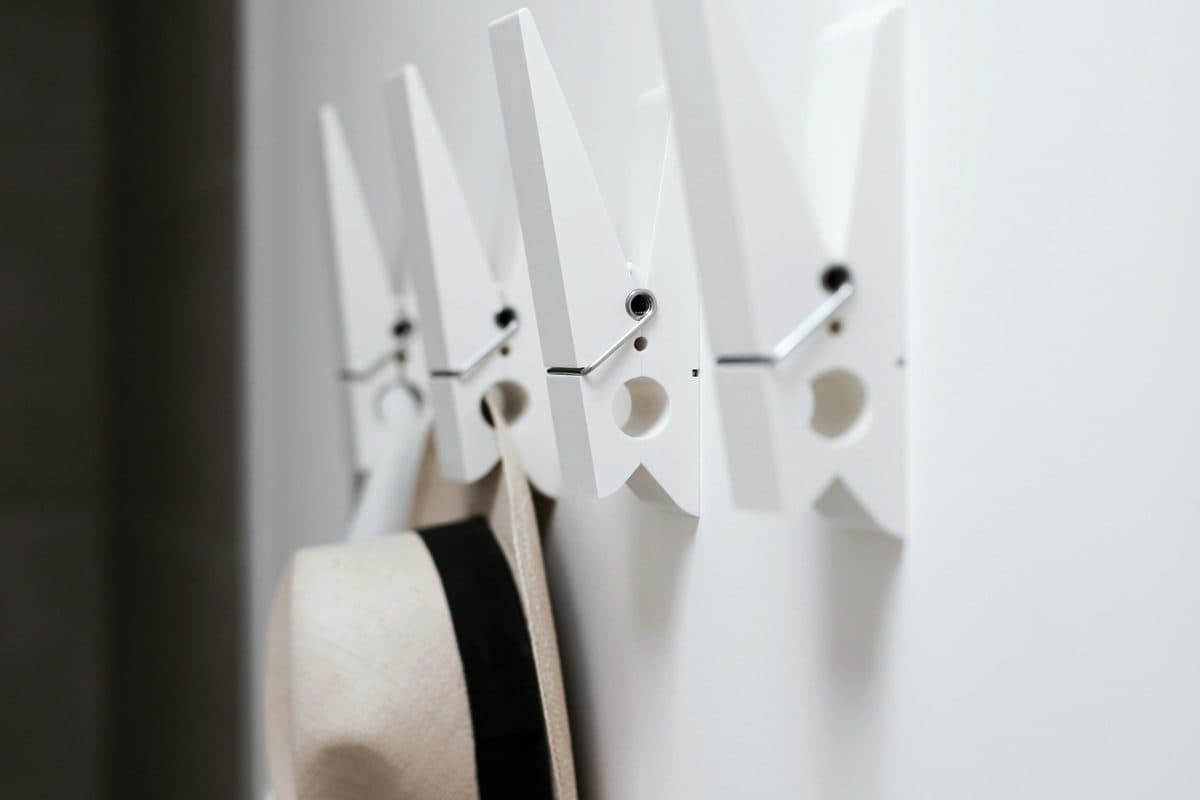
Jackets hanging on hooks over a bedroom door, a no-drill way to keep clothes off the floor. Photo via Unsplash.
Most renters have the same question when they look at an empty wall: what can we hang here without losing our deposit? Product packaging promises a lot, and online photos show heavy shelves held up by a strip of tape. Some of that works. Some of it ends up on the floor at 3 a.m.
This guide to renter-friendly storage is about being realistic. We'll go through the main types of no-drill storage, what kind of load each one suits, and how to check whether a product will hold what you're planning to put on it. We won't give you made-up weight numbers, because real limits depend on the specific product, your wall, and how it's installed. Instead, we'll show you where to find those numbers and how to use them sensibly.
Costs are approximate ranges in USD based on typical big-box, discount, and secondhand prices. They vary by country and over time, so treat them as ballpark guides.
Key to labels:
🏠 Renter-friendly / no-drill — no holes, no permanent changes, easy to remove when you move out.
Approx. — rough cost range in USD.
Key takeaways
Read the lease first. Some agreements allow small picture nails, and others allow no changes.
Use the package rating and surface list, and stay comfortably below the stated limit.
Adhesive hooks suit light, still items on smooth painted drywall, not humid spots or anything above a bed.
Suction needs smooth glass or glazed tile. Magnets need a surface that is actually magnetic.
Over-the-door racks carry medium loads if you measure thickness and the top gap.
A basic tension rod is for light hanging. Shelves need a floor-to-ceiling pole rated for them.
Put heavy items on freestanding furniture, low on the unit, and anchor tall pieces.
Remove adhesive slowly with the brand's method, and photograph walls when you move in and out.
First, Check Your Lease (It Might Allow More Than You Think)
Step 1. Read the lease or ask the landlord before you rule out every hole.
Before you rule out every hole, read your lease or ask your landlord. Some rental agreements allow small picture-hanging nails, while others ban any changes at all. Rules vary by landlord, building, and country.
It's worth asking because a single small nail can be more secure than adhesive for some jobs, and it's often easy to fill when you move out. If the answer is no, or you'd rather not risk it, everything below is truly no-drill.
The Three Questions to Ask Before Hanging Anything
Step 2. Match the rating, the surface, and the kind of load.
Whatever product you're considering, run through these three questions.
1. What does the package say it holds?
Every reputable no-drill product should list a maximum weight rating and the surfaces it's designed for. That number is usually measured under good conditions: a clean, suitable surface, correct application, and a steady load. Real life is messier, so plan to stay comfortably below the stated limit rather than right at it.
If a product doesn't list a weight rating at all, treat it as light-duty only.
2. What is your wall (or door, or tile) made of?
The same hook can behave very differently on different surfaces. Before buying, figure out what you're working with:
Smooth painted drywall or plaster: the surface most adhesive products are designed for.
Textured walls: adhesive may not make full contact, so many products don't recommend them.
Wallpaper: adhesive can pull the paper off when removed.
Tile and glass: suitable for some suction and bathroom-specific adhesive products.
Wood, metal, or laminate doors: check whether the product mentions these surfaces.
Freshly painted walls: many adhesive brands advise waiting a set period after painting; check the package for how long.
3. What kind of load is it?
A framed print that hangs still is very different from a bag you yank off a hook every morning. Items that get pulled, swung, or bumped put more stress on any mount than a steady weight. For anything that moves a lot (bags, coats, towels), choose a method that doesn't rely on adhesive alone, like an over-the-door rack or a freestanding stand.
Light Duty: Adhesive Hooks, Strips, and Clips
Light duty. Adhesive hooks for keys, towels, and lightweight frames.
Best for: keys, dish towels, lightweight frames, cables, measuring spoons, a small calendar.
Removable adhesive hooks and strips are the classic renter tool. Used properly, they can be very handy. Used badly, they fall or peel paint.
How to get the best results
Clean the surface with rubbing alcohol (not household cleaners, which can leave residue) and let it dry, unless the package says otherwise.
Press firmly for the amount of time the instructions specify.
Wait before loading. Many products recommend waiting a period after application before hanging anything; check the package.
Use more than one for wider items, spreading the load.
Remove slowly, following the brand's exact technique, which often means stretching the tab parallel to the wall rather than pulling it outward.
Where we don't recommend adhesive
Above a bed, sofa, or crib, where a falling item could hurt someone.
For valuables, glass, or mirrors heavy enough to be a hazard.
In very humid spots, unless the product is specifically rated for bathrooms.
🏠 No-drill. Approx. $5–$15 per pack.
Light to Medium Duty: Suction and Magnetic Storage
Light to medium. Suction on smooth tile, magnets only on magnetic metal.
Best for: shower items, razors, sponges, spice jars on a fridge, small kitchen tools.
Suction cups and suction-lock products
Suction works best on smooth, non-porous surfaces like glass, glazed tile, and mirrors. It doesn't work well on grout lines, textured tile, or painted walls. Newer locking suction designs tend to hold better than basic cups, but they still loosen over time, so check them now and then.
🏠 No-drill. Approx. $10–$30.
Magnetic racks and hooks
Magnetic storage can stick to the side of a fridge, a metal door, or a steel backsplash. Two cautions: check that the surface is actually magnetic (some stainless steel finishes and panel-front fridges aren't), and check your fridge manufacturer's guidance about attaching things to the sides. Magnetic strength varies a lot between products, so rely on the stated rating.
🏠 No-drill. Approx. $10–$30.
Medium Duty: Over-the-Door Storage
Medium duty. Over-the-door racks for coats, towels, shoes, and bags.
Best for: coats, bags, towels, shoes, pantry items, cleaning supplies.
Over-the-door storage is one of the most dependable no-drill options because it hangs on the door itself rather than sticking to it. The weight rests on the top edge of the door. The fit, the load, and what to do when the door will not latch are in over-the-door storage that does not wreck the door.
Before you buy
Measure the door's thickness. Over-door hooks are sized for a range of thicknesses; too thin and they rattle, too thick and they won't fit.
Check the gap at the top. The hook needs room between the door and the frame. If the door is tight, look for slim, flat hooks.
Make sure the door still closes and latches with the organizer and its contents in place.
Consider the door type. Many interior rental doors are hollow-core. They're fine for typical organizers, but very heavy loads can stress hinges or make the door swing on its own. Spread weight across the width rather than loading one side.
Add felt pads behind the organizer to protect the door from scuffs.
🏠 No-drill. Approx. $10–$60 depending on size.
Medium Duty: Tension Rods and Tension Poles
Medium duty. A short rod for light jobs, a rated pole for shelves.
A spring-loaded tension rod wedged between two walls or cabinet sides is great for light jobs: a café curtain, spray bottles hanging under a sink, or lids stored upright in a cabinet. The cabinet layout around that rod is in under-sink organization. Load is limited by the rod's strength, the span, and how much grip the ends have, so a long rod usually holds less than a short one of the same type. Where those rods slip, and what to use instead, is in tension rod hacks for renters. To match a width to a typical range, use the tension rod size calculator.
🏠 No-drill. Approx. $5–$20.
Floor-to-ceiling tension poles
These press between floor and ceiling and can support shelves, baskets, or hooks. They're useful in corners, beside a bed, or in a shower. To use them well:
Check the stated weight rating per shelf and in total.
Make sure the ceiling is solid where the pole presses (not a drop-ceiling tile or a weak spot).
Recheck the tension occasionally, especially in humid bathrooms.
🏠 No-drill. Approx. $25–$120.
Heavy Duty: Freestanding Furniture
Heavy duty. Freestanding furniture carries weight on the floor, not the wall.
Best for: books, kitchen appliances, pantry food, heavy laundry baskets, anything you actually worry about.
When something is heavy, our honest advice is to put the weight on the floor. Freestanding shelves, cube units, over-the-toilet stands, wardrobe racks, rolling carts, and leaning ladder shelves don't depend on wall adhesion at all.
A few tips:
Check the stated load per shelf on the product listing or manual.
Put heavy items on lower shelves to keep the unit stable.
Anchor tall furniture against tipping. Most anti-tip kits need a small screw; ask your landlord, because safety matters more than a tiny hole. This is especially important in homes with children.
Look secondhand for solid pieces at lower prices.
🏠 Freestanding (anchoring may need permission). Approx. $20–$150.
How Do No-Drill Options Compare by Load?
Method
Best suited to
Main limits
Approx. cost (USD)
Adhesive hooks and strips
Light, still items
Surface type, humidity, removal
$5–$15
Suction
Light items on glass or smooth tile
Loosens over time
$10–$30
Magnetic
Light kitchen items on magnetic metal
Surface must be magnetic
$10–$30
Over-the-door racks
Coats, bags, shoes, towels
Door thickness and gap
$10–$60
Tension rods
Light hanging items
Span and end grip
$5–$20
Tension poles
Shelves and baskets
Ceiling surface, stated rating
$25–$120
Freestanding furniture
Heavy items
Floor space, tipping
$20–$150
Always check the specific product's rating; this table describes general suitability, not exact capacities.
Where Do You Use Each Method?
Here's how these methods tend to work room by room:
Entryway: over-the-door hooks for coats and bags, a freestanding shoe rack, a light adhesive hook for keys.
Kitchen: under-shelf baskets, door-mounted cabinet racks, a magnetic rack on a suitable fridge side, and a rolling cart. A small kitchen pantry uses those same no-drill pieces.
Bathroom: an over-the-toilet stand, a tension-pole shower caddy, and bathroom-rated adhesive or suction for light items. See our small bathroom storage ideas for rentals.
Closet: a hanging rod extender, over-door organizers, and freestanding drawers. More in our small closet organization ideas.
Move-out. Remove adhesive slowly and keep photos of the walls.
Remove adhesive products slowly using the brand's instructions. Don't rush or pull outward.
If residue remains, test a gentle remover on a hidden spot first.
Wipe down suction marks on tile or glass.
Check doors for scuffs where organizers hung.
Take photos of walls and doors when you move in and when you move out, so you have a record.
All-steps checklist for matching no-drill storage to the weight it needs to hold.
How Do You Match the Method to the Weight?
No-drill storage works best when you match the method to the job: adhesive for light things, doors and tension for medium loads, and the floor for anything heavy. Read the label, respect the rating, and you can add plenty of storage to a rental without risking your walls or your deposit.
Pinterest pin: No-drill storage weight guide for renters
Pinterest pin: How to use adhesive hooks safely in rentals
Frequently asked questions
How much weight can adhesive hooks hold?
It depends on the specific product, the surface, and how you apply it. Each package lists a maximum weight and the surfaces it is designed for. Treat that number as the limit for a properly applied hook on a suitable surface, stay comfortably below it, and use a different method for anything heavy or valuable.
Do adhesive hooks damage walls?
They are designed to remove cleanly when used on recommended surfaces and taken off according to the instructions, but results vary. Freshly painted walls, wallpaper, textured surfaces, and low-quality paint are more likely to peel. Test in a hidden spot first and follow the removal steps exactly.
What is the strongest no-drill storage for renters?
Freestanding furniture is usually the strongest option because the floor carries the weight, not the wall. Floor-to-ceiling tension poles and sturdy over-the-door racks come next. Adhesive products are best for light items.
Are tension rods strong enough for shelves?
A simple tension rod is fine for light jobs like a curtain or spray bottles. For shelves, look for a floor-to-ceiling tension pole system designed to hold shelves, check its stated weight rating per shelf, and make sure both ends press against solid surfaces.
Can I hang a mirror or heavy frame without drilling?
Some adhesive picture-hanging strips are rated for frames of certain weights, but heavy mirrors are risky to hang with adhesive. A safer option is to lean a large mirror on the floor or a dresser, or ask your landlord whether small picture-hanging nails are allowed.
Get the small apartment checklist
One short email a week with a small-space fix that actually works in a rental. You also get our printable room-by-room checklist. No spam, unsubscribe anytime.