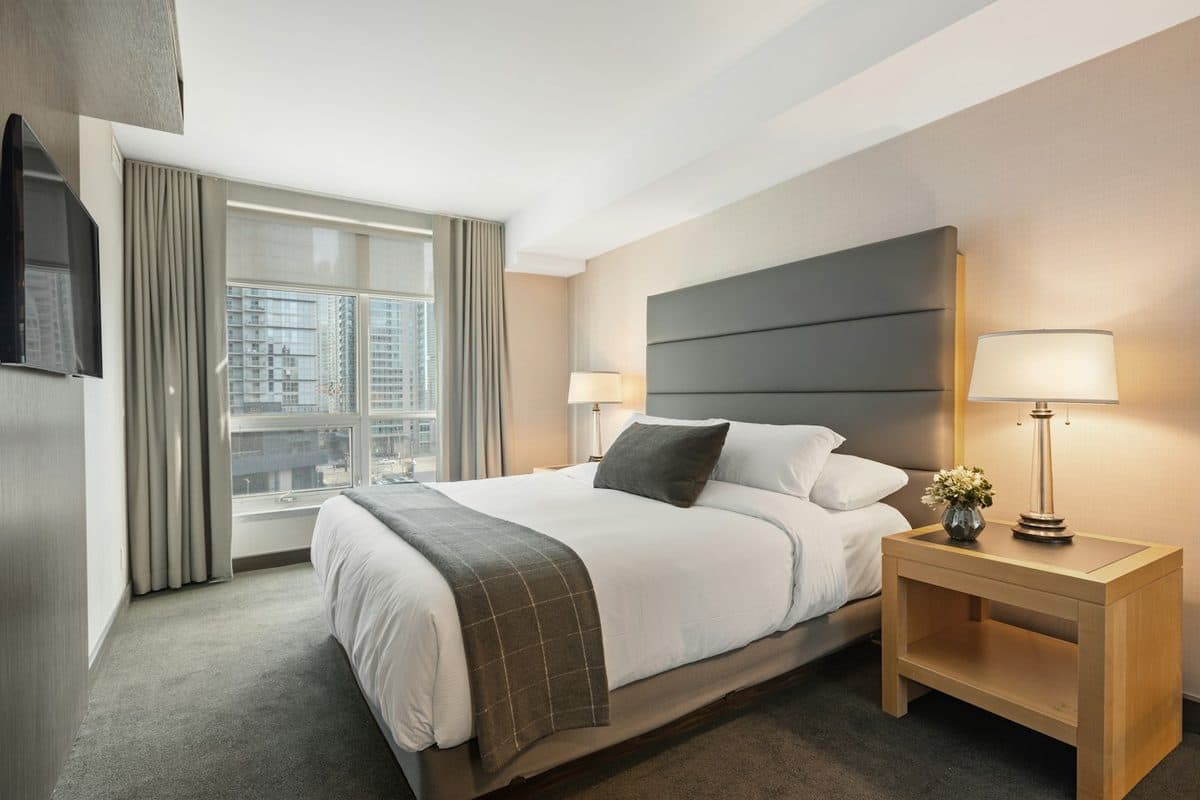
Small bedroom with a made bed, a nightstand, and a lamp. Photo via Unsplash.
A small bedroom has to do a lot: it's where you sleep, get dressed, store clothes, and maybe work or wind down at the end of the day. When there's only room for a bed and a narrow path around it, every extra item lands on the dresser, the floor, or the chair in the corner.
Small bedroom organization works best with three tools: the space under the bed, the height of the walls, and furniture that does two jobs. In this guide we'll walk through each one with budget ranges, plus renter-friendly (no-drill) options and a simple daily habit to keep the room restful.
Costs are approximate ranges in USD based on typical big-box, discount, and secondhand prices. They vary by country and over time, so treat them as ballpark guides.
Key to labels:
🏠 Renter-friendly / no-drill — no holes, no permanent changes, easy to remove when you move out.
Approx. — rough cost range in USD.
Key takeaways
Keep the bedroom for sleeping, dressing, and relaxing, and move unrelated clutter elsewhere.
Measure under-bed clearance before you buy bins, and add risers only if the bed stays stable.
Use tall narrow furniture, a tension pole, or over-door hooks instead of spreading storage across the floor.
Skip heavy or adhesive-mounted shelves directly above the bed.
Let a bench, dresser, or storage ottoman do a second job.
Give worn-once clothes a hook or basket so they do not pile on a chair.
Store one spare sheet set inside its pillowcase and rotate seasonal bedding.
1Step 1: Declutter and Decide What Belongs in the Bedroom
Step 1. Edit the bedroom before adding storage.
Not everything stored in a bedroom needs to be there. Walk around the room and ask, for each group of items: does this relate to sleeping, dressing, or relaxing? Items that don't (paperwork, exercise equipment, kitchen overflow) might belong elsewhere.
Step 2. Measure the room and protect the walkways.
Before buying storage, make sure the furniture is in the best place.
Measure and sketch
Measure the room, the bed, and any existing furniture. Mark windows, doors, radiators, and outlets. Note how far drawers and doors open, since a dresser drawer that hits the bed frame is a daily frustration.
Protect the walkways
Keep a clear path from the door to the bed, closet, and window. In a very small room, pushing the bed against one wall can free up a lot of floor space, though it makes the bed harder to make. Try it and see which you prefer.
Think about where storage goes
Plan three types of storage:
Under: the space under the bed.
Up: wall height, corners, the back of the door.
Dual-use: furniture that stores as well as serves another purpose.
3Step 3: Use the Space Under the Bed
Step 3. Match under-bed containers to the clearance you measured.
The space under the bed is one of the largest storage areas in a small bedroom, and it's often empty or full of dust.
Check the clearance
Measure from the floor to the underside of the bed frame. That height determines what kind of storage fits.
Raise the bed if needed
Bed risers lift the bed and add clearance for taller bins. Check the stated weight rating, make sure they suit your bed's leg type, and confirm the bed stays stable. Risers also raise the mattress height, so think about comfort. 🏠 No-drill. Approx. $15–$30.
Choose the right containers
Rolling drawers or bins with wheels: best for things you use often, like shoes or workout clothes. Approx. $15–$40 each.
Low lidded plastic bins: keep dust out; good for off-season clothes. Approx. $10–$25 each.
Zippered fabric bags: light and flexible for bedding and sweaters. Approx. $10–$25 for a set.
Vacuum storage bags: compress bulky duvets and coats, though they can crease some fabrics. Approx. $15–$30 for a set.
Label the end of each container that faces out, so you know what's inside without pulling everything out.
Consider a storage bed later
If you need a new bed anyway, a bed frame with built-in drawers or a lift-up base can add a lot of storage. Look secondhand to save money, and check the dimensions against your room.
4Step 4: Go Vertical
Step 4. Use height, and keep the wall above the bed clear of heavy items.
When floor space is limited, use height.
Tall, narrow furniture
A tall, narrow dresser or bookcase uses less floor space than a wide, low one while holding a similar amount. Anchor tall furniture against tipping; most anti-tip kits need a small screw, so ask your landlord, because safety matters more than a tiny hole. Approx. $40–$150.
Tension-pole shelving
A floor-to-ceiling tension pole beside the bed or in a corner can hold several small shelves for books, plants, or a lamp. Check the stated rating and make sure the ceiling is solid where the pole presses. 🏠 No-drill. Approx. $40–$120.
Over-the-door storage
The back of the bedroom door can hold robes, bags, scarves, or shoes. Over-door hook racks and pocket organizers hang without any installation. Measure the door thickness and the top gap, and check that it still closes. 🏠 No-drill. Approx. $10–$30.
Leaning ladder shelves
A leaning shelf or ladder against the wall adds vertical storage without screws, though many manufacturers recommend securing it for stability, so check the instructions. Approx. $30–$80.
A note about storage above the bed
Be careful with anything mounted above the bed. A shelf or frame that falls could hurt someone while they sleep. Avoid heavy items, glass, and adhesive-mounted shelves above the headboard. For more on what different no-drill products can safely handle, see renter-friendly storage without drilling.
5Step 5: Choose Dual-Use Furniture
Step 5. Every large piece should store something or serve a second job.
In a small bedroom, furniture should earn its place by doing more than one job.
Storage bench or trunk at the foot of the bed: seating for putting on shoes, plus storage for blankets or off-season clothes. Approx. $40–$120.
Dresser as a nightstand: a small dresser beside the bed holds clothes and serves as a bedside table. Approx. $40–$150, less secondhand.
Nightstand with drawers or shelves: instead of an open table. Approx. $25–$80.
Headboard with storage: some headboards have shelves or cubbies built in, replacing the need for nightstands in tight rooms. Keep anything stored there light.
Desk that doubles as a vanity: a small desk with a mirror on top works for both getting ready and working. Approx. $60–$150.
Ottoman with storage: extra seating that hides throws or accessories. Approx. $30–$90.
If your bedroom is also your living space, our studio apartment organization guide covers how to divide one room into zones.
6Step 6: Organize the Nightstand
Step 6. Leave only nightly essentials on the nightstand.
The nightstand is where clutter gathers fastest: books, glasses, chargers, lip balm, receipts, water glasses.
Keep only nightly essentials on top: a lamp, a book, and a small tray for glasses or jewelry. Approx. $5–$15 for a tray.
Use the drawer for everything else, with a small divider or box to keep it from becoming a junk drawer.
Manage cables with a charging station or adhesive cable clips on the back of the nightstand. 🏠 No-drill. Approx. $8–$25.
Clip-on bedside shelf: if there's no room for a nightstand, a shelf that clips to the bed frame holds a phone and a book. 🏠 No-drill. Approx. $15–$35.
7Step 7: Stop the Chair Pile
Step 7. Give worn-once clothes a hook instead of a chair.
Almost every bedroom has a spot where worn-once clothes end up. Instead of fighting it, give those clothes a proper home. Dirty laundry that keeps migrating to the floor belongs in the hamper plan in small laundry room organization. For worn-once pieces:
A few hooks on the back of the door. 🏠 No-drill.
A small valet stand or a single hook near the closet.
A basket labeled "wear again."
Approx. $10–$30.
8Step 8: Store Bedding and Linens Smarter
Step 8. Store one spare sheet set inside its pillowcase.
Spare sheets, duvets, and pillows take up a surprising amount of space in a small apartment.
Keep one spare set per bed. For most people, one set on the bed and one spare is enough. Extra sets can be donated.
Store sheet sets inside a pillowcase. Fold the fitted sheet, flat sheet, and spare pillowcase and tuck them into the matching pillowcase. Each set stays together and stacks neatly.
Use the storage bench or under-bed bins for bulky duvets and blankets, ideally in breathable bags rather than sealed plastic for long-term storage.
Rotate seasonal bedding when you swap clothes, so heavy winter duvets aren't taking prime space in summer.
Approx. $10–$25 for a couple of breathable storage bags.
9Step 9: Keep It Visually Calm
A small bedroom feels smaller when every surface holds something. A few habits help:
Choose closed storage (drawers, lidded bins, baskets) over open shelves for everyday clutter.
Keep a consistent color palette for bins, baskets, and bedding, so storage blends into the room instead of standing out.
Clear the floor. Anything stored on the floor besides furniture makes the room feel cramped. Move it under the bed, onto shelves, or out of the room.
Limit décor to a few pieces. One plant, one framed print, and a lamp often look better than many small items, and they're easier to dust.
Use a mirror. A full-length over-the-door or leaning mirror bounces light around and helps the room feel bigger. 🏠 No-drill. Approx. $25–$60.
How Do You Reset the Bedroom in 5 Minutes?
A short evening routine keeps a small bedroom feeling calm:
Put worn clothes in the hamper or on the "wear again" hook.
Clear the nightstand down to the essentials.
Return stray items to their under-bed bins, drawers, or shelves.
All-steps checklist for organizing a small bedroom on a budget.
What Makes a Small Bedroom Feel Restful?
A small bedroom doesn't need more square footage to feel calm. It needs the right things in the right places: everyday items close at hand, off-season items under the bed, and furniture that pulls double duty. Start with the edit, add storage under, up, and in dual-use pieces, and let a short evening reset do the rest.
Pinterest pin: Small bedroom organization on a budget overview
Pinterest pin: Under-bed storage ideas for small bedrooms
Frequently asked questions
How do I organize a small bedroom with no closet?
Combine a dresser or freestanding wardrobe with under-bed storage and a garment rack for the clothes that need hanging. Add over-the-door hooks for robes and bags, and keep off-season clothes in lidded bins under the bed.
What is the best under-bed storage for a small bedroom?
Measure the clearance first. Rolling drawers or low lidded bins work well for frequently used items, while vacuum bags or zippered fabric bags suit bulky off-season bedding. If the bed is too low, bed risers can add clearance; check their stated weight rating and stability.
How can I make a small bedroom look bigger and less cluttered?
Keep surfaces mostly clear, choose closed storage over open shelves where possible, use storage pieces in a consistent color, keep walkways open, and give worn-once clothes a hook so they don't pile on a chair.
Is it safe to put shelves above the bed?
Be cautious. Anything above a bed can fall on someone while they sleep. Avoid heavy items, glass, or adhesive-mounted shelves over the headboard, and choose a headboard with built-in storage or a nightstand instead.
How do I organize a small bedroom on a tight budget?
Declutter first and rearrange what you already own. Then prioritize a few low-cost upgrades with the biggest impact, such as bed risers and under-bed bins, slim hangers, and over-the-door hooks, and check secondhand listings for dressers and benches.
Get the small apartment checklist
One short email a week with a small-space fix that actually works in a rental. You also get our printable room-by-room checklist. No spam, unsubscribe anytime.