A denim jacket hanging over the top edge of a white door. Photo via Unsplash.
A lot of apartment doors are hollow, and a lot of leases treat a screw in that door as damage. The storage still has to go somewhere. Coats on a chair are the usual result, and that pile is part of how to declutter a small apartment. The door is only the landing spot.
Over-the-door organizer storage hangs from the top edge of the door. The door carries the weight. You do not drill it. It works when three things are true: the hook fits the thickness and the top gap, the door still latches, and the things on it are light enough that the door does not swing on its own.
🏠 Renter-friendly / no-drill — hangs over the door, with no screws.
Approx. — rough cost range in USD.
Key takeaways
Measure door thickness and the gap over the top before you buy a rack.
Hang the rack so the door still closes, latches, and clears the floor.
Use hooks for coats and a daily bag. Use pockets for light, flat items.
Skip screws, nails, and adhesive on the door face unless the lease says yes.
Spread weight across the door. Do not load one side of a hollow door.
If the door is too tight or too heavy, use a freestanding rack instead.
What Can an Apartment Door Hold?
Stand at the door you want to use and open it all the way. Then list only what you would hang this week:
The coat or hoodie you wear now.
The bag you carry daily.
A towel or a robe, if this is the bathroom door.
A few flat things, such as scarves, mail, or spice packets, if you use a pocket organizer.
That is the job. A door is not a second closet. If the list is longer than a few items per person, the extra pieces go on a rod inside the closet, not on another hook.
How Do You Add Over-the-Door Storage Without Wrecking the Door?
1Step 1: Measure the door and the gap
Step 1. The edge and the gap decide which hook will fit.
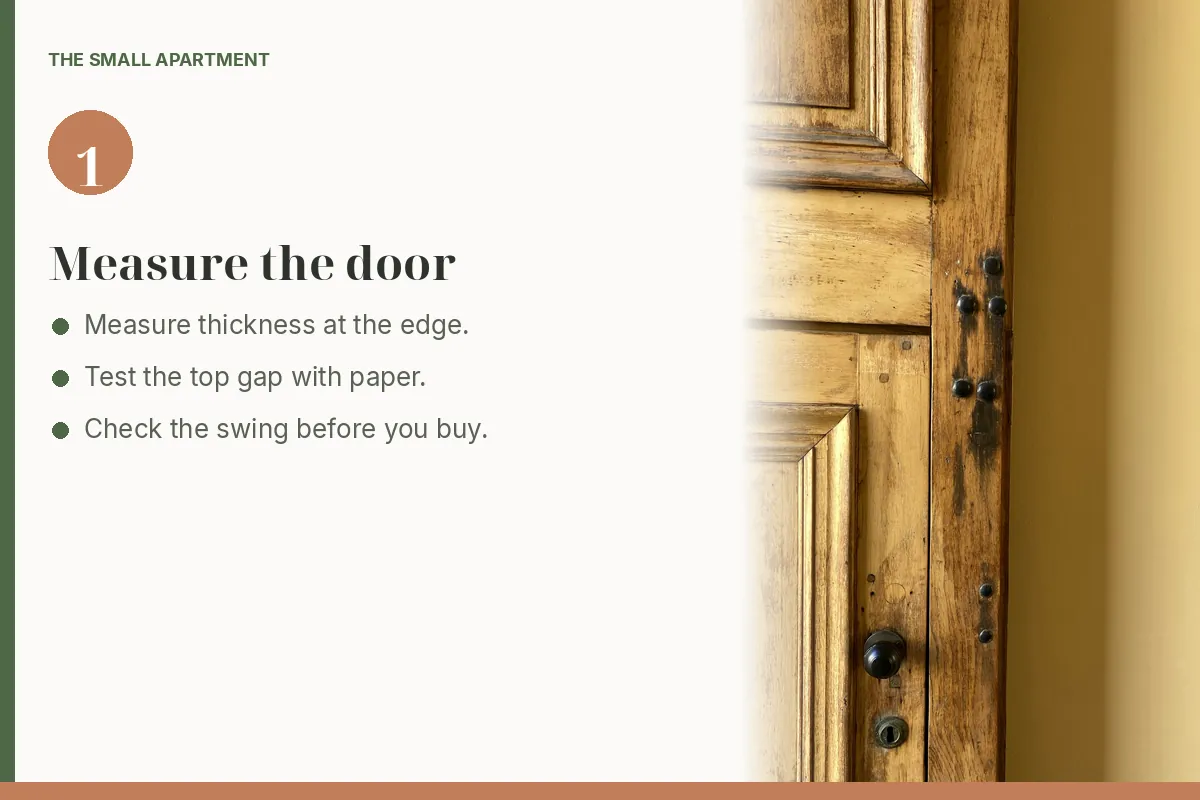
The door in the photo is an old wood door, hinges and all. Yours may be a plain white slab. The measurements are the same.
Thickness. A lot of interior doors in US apartments are about 1 3/8 inches (35 mm). Some are 1 3/4 inches (45 mm). UK and Australian doors vary. Measure the edge with a tape, then read the rack's range.
Top gap. Close the door. Slide a sheet of paper over the top. If the paper will not pass, a bulky hook will sit on the frame and keep the door from closing. Look for a slim hook.
Swing. Open the door with the future load in mind. A pocket organizer sticks out from the face. It should not hit a towel bar, a light switch, or the fridge.
Write the thickness on a note before you shop. A rack that is "universal" and does not list a range is a guess.
2Step 2: Match the rack to the load
Step 2. Hooks for coats. Empty hooks are fine.
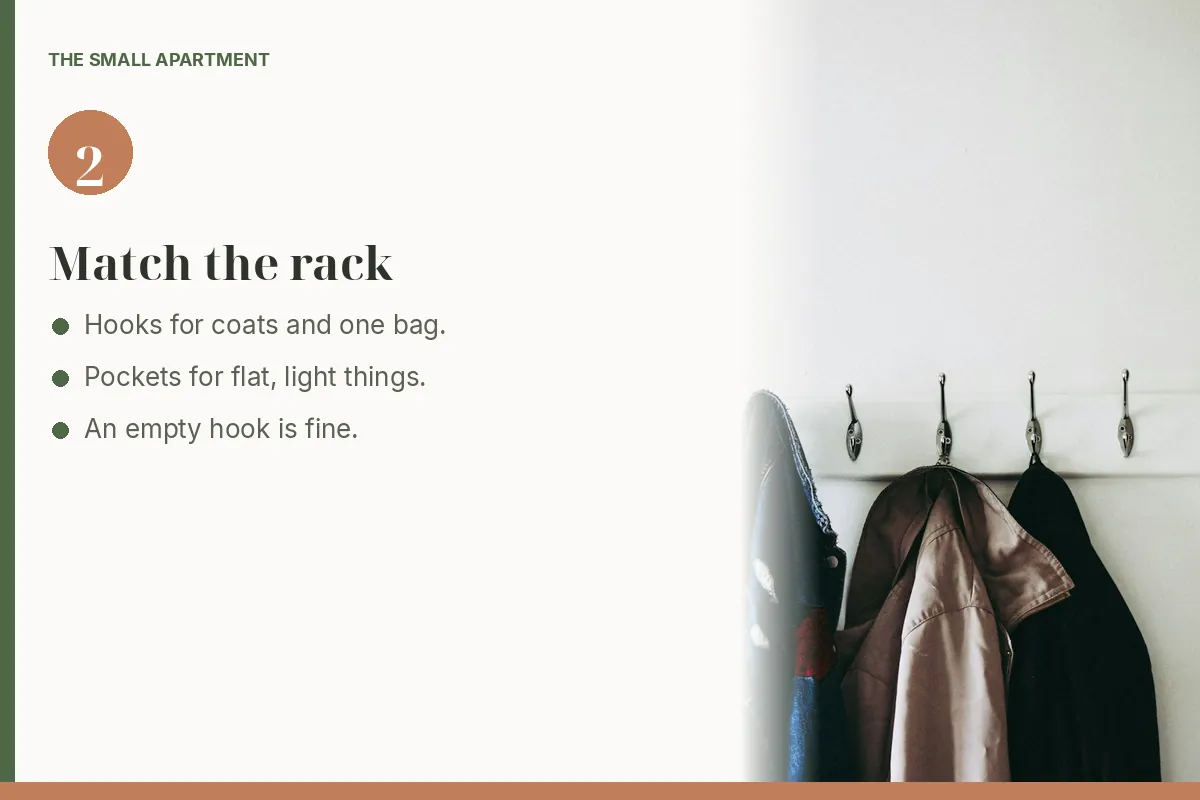
The rail in the photo is screwed to a wall. That is the look, not the method, if you cannot drill. An over-the-door hook rack copies the useful part: a few hooks, a coat on some of them, and hooks left empty.
🏠 What to buy:
Two to four hooks for coats and one bag. Approx. $8–$20. This is the default for a bedroom or closet door.
A pocket organizer for scarves, hats, mail, or cleaning cloths. Approx. $12–$25. Pockets are a poor home for heavy boots.
A shoe pocket only for a few pairs of light shoes, on a closet door, and only after you test the door swing. Approx. $12–$25.
One hook per person, plus one shared hook, is enough in most apartments. Empty hooks are not a failure. They are how the door stays closable.
Felt pads on the back of the metal hooks keep the paint quieter. They cost a few dollars and peel off with the rack.
3Step 3: Leave the screws in the store
Step 3. A screw plate is a hole you have to explain later.
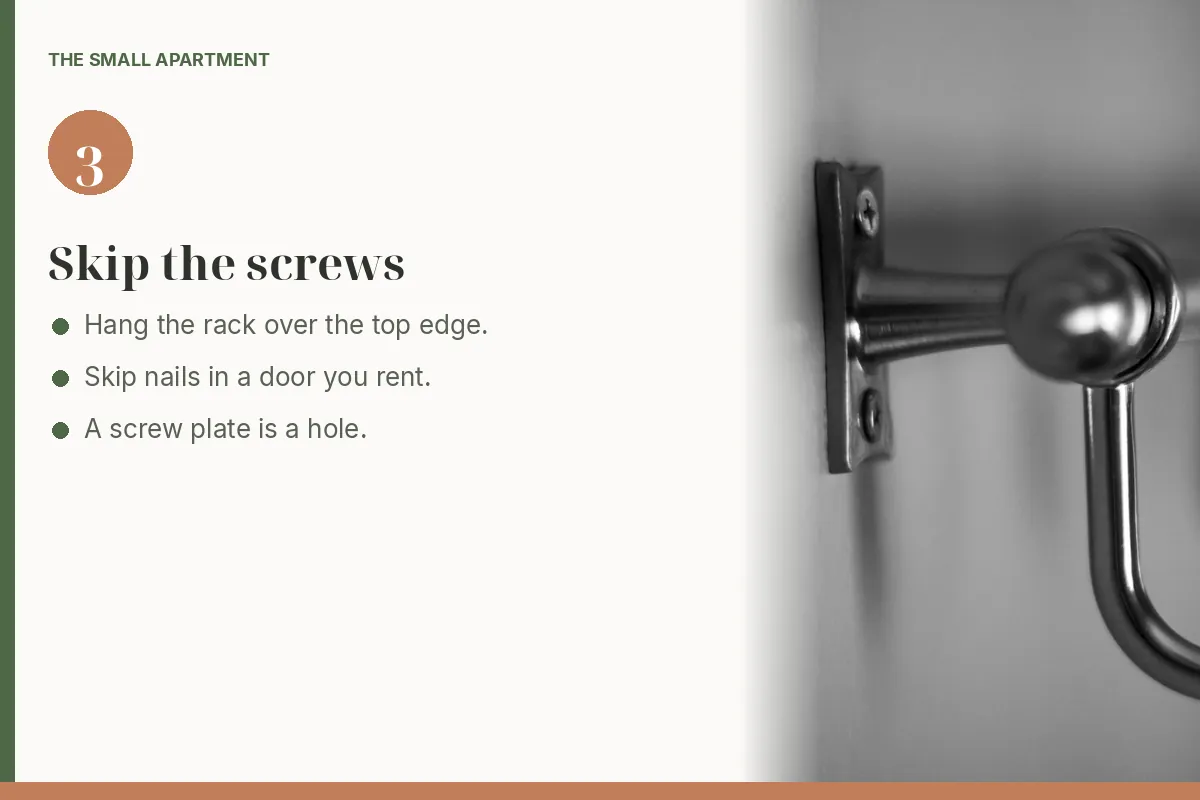
The hook in the photo is doing a normal job on a wall that someone meant to fasten into. On a rental door, that plate is the damage. The hook-over style from the cover photo sits on the top edge instead.
Skip, on a door you do not own:
Screws and nails into the face or the edge.
Adhesive hooks on the paint, unless you have tested a scrap of the same paint and the product is rated for it. A door that slams is a bad surface for adhesive.
A full-length mirror that needs hardware, unless the lease allows it. A mirror that hangs over the door is the removable version. Approx. $15–$40.
If you want a peg rail like a mudroom, ask in writing. Until you have a yes, the over-door hook is the whole system. 🏠
4Step 4: Do not load one side of a hollow door
Step 4. This door is past a normal coat load.
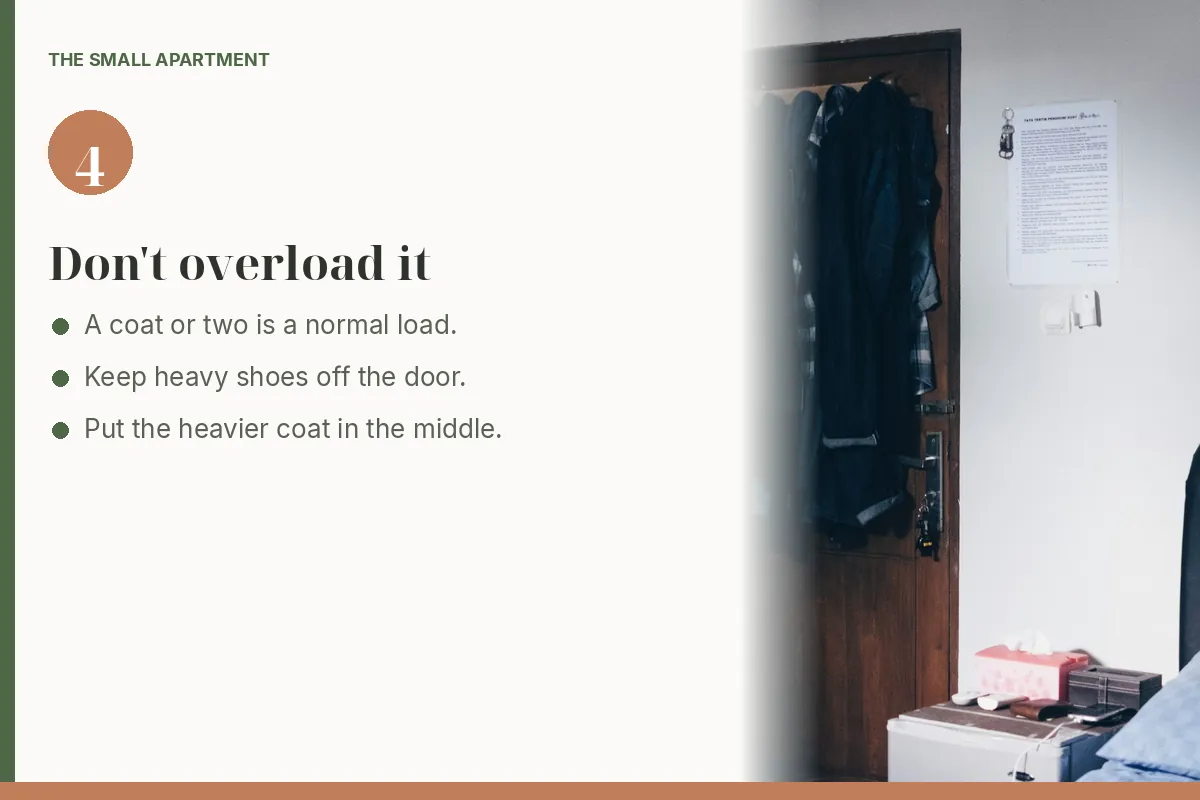
The bedroom door in the photo is the failure mode. Jackets are stacked on the hooks, the door is working as a closet, and anything else you add will make it worse.
A hollow-core door is a skin over a light frame. It can hold everyday coats. It complains when the weight sits on one edge:
The door drifts open.
The latch misses.
The top edge rubs.
Hinges loosen over months, which is a repair you may pay for.
Spread hooks across the width. Put the heavier coat near the middle, not on the latch side. If you have more coats than hooks, the rest go on the closet rod. That is the closet's job, covered in small closet organization.
Wet coats need air between them. Two damp jackets pressed together will mark the paint behind them.
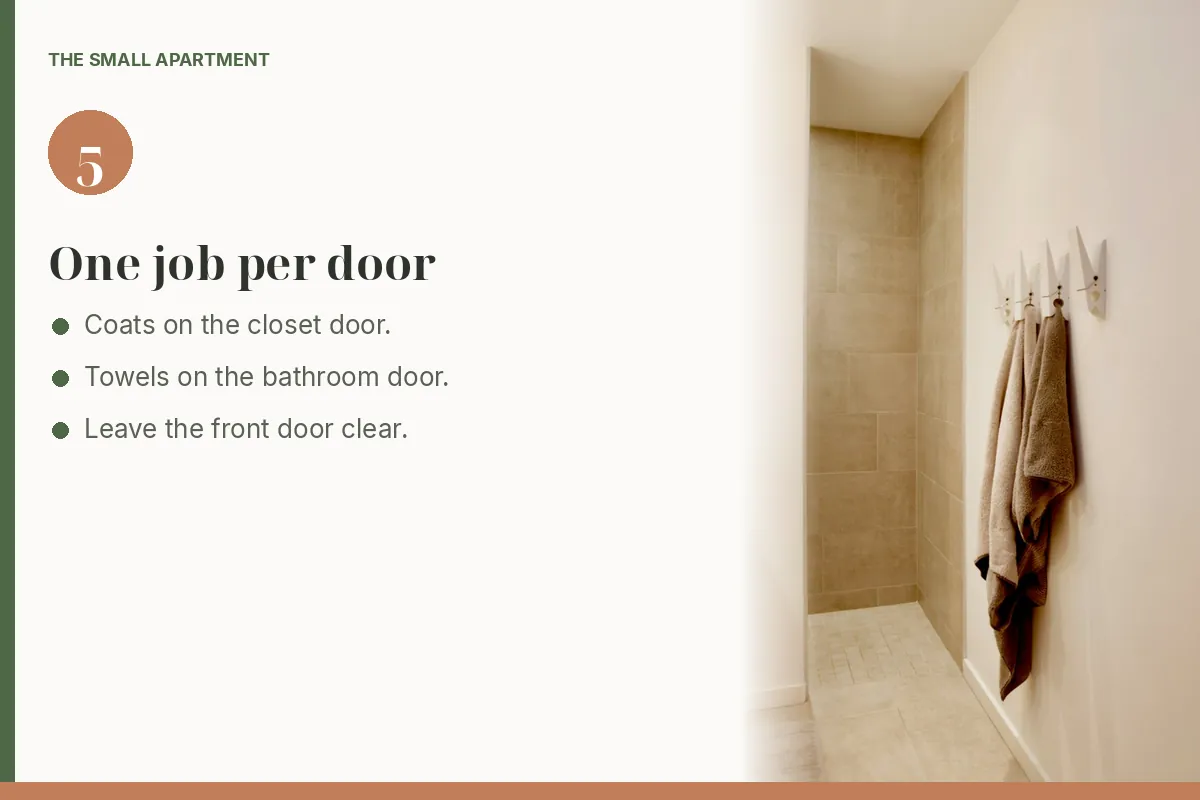
5Step 5: Give each door one light job
Step 5. Towels belong on a bath door, not with the coats.
The hooks in the photo are on a bathroom wall, with a towel and a clear path to the sink. Copy the limit, even if your version hangs on the door.
Bedroom or closet door: coats, a robe, the daily bag.
Bathroom door: towels, if the door still clears the vanity and the towel is not trapped against a wet wall. A tension rod in the shower is often better for the towel you are using. That setup is in small bathroom storage ideas.
Pantry or cabinet door: flat packets, wraps, or a light spice rack, and only if the door still closes. Jars on a deep rack hit the shelf. Measure that gap before you buy. The shelf behind that door is a small kitchen pantry job. A light spice rack on the door is covered in spice organization for a tiny kitchen.
Front door: usually nothing bulky. A hook that blocks the peephole or the latch is the wrong door.
One job per door. The coat door does not also become the shoe library.
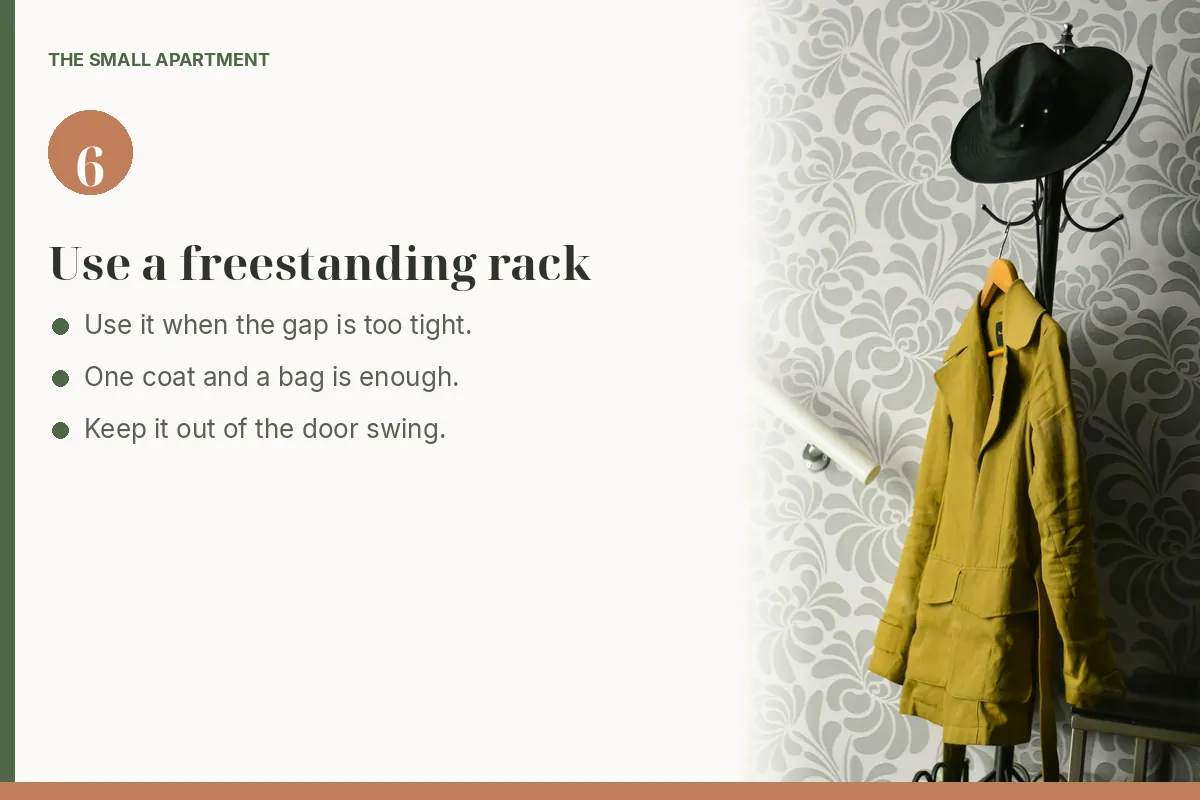
6Step 6: Use a freestanding rack when the door cannot
Step 6. A coat tree leaves with you and leaves the door alone.
Some doors will not take a rack. The gap is too tight, the door is glass, or the closet door slides. A freestanding rack does the job without touching the door.
The rack in the photo holds a coat and a hat, which is the right scale. A tree with six coats becomes furniture you trip on.
Put it beside the door, out of the swing.
One coat and a bag per person is still the limit.
Approx. $20–$60, less if you find one secondhand. 🏠 It leaves when you do.
If even that footprint is too much, one over-door hook on a closet door inside the room is enough. The entry can stay as a tray and a dish, which is the plan in small entryway storage.
What Should You Hang, and What Should You Leave Off?
Piece
Fits an apartment door
Watch out
Hook-over coat rack 🏠
Coats and one bag
Must match thickness and still latch
Pocket organizer 🏠
Scarves, mail, flat packets
Sticks out; test the swing
Slim shoe pockets 🏠
A few light pairs, on a closet door
Heavy boots pull a hollow door open
Over-door towel bar 🏠
One or two towels
Keep towels off a wet painted face
Screwed peg rail
Only with written permission
Holes in the door are damage
Packed shoe caddy plus winter coats
Almost never
One side of a hollow door is too much
Budget: hooks and a pack of felt pads are often under $20. A pocket organizer is the next piece if you have flat things with no home, often $12–$25. Buy the freestanding rack only after the door test fails.
What Do You Remove When You Move Out?
Lift the rack off. Peel felt if you added it. Wipe the top edge. The door should look the way it did when you moved in, minus ordinary wear. Photograph the door on the way out if your lease walkthrough is picky. You should not have holes to patch.
If a previous tenant left screw holes, do not add yours next to them. Report the old holes. A new hole is harder to explain than an old one you did not make.
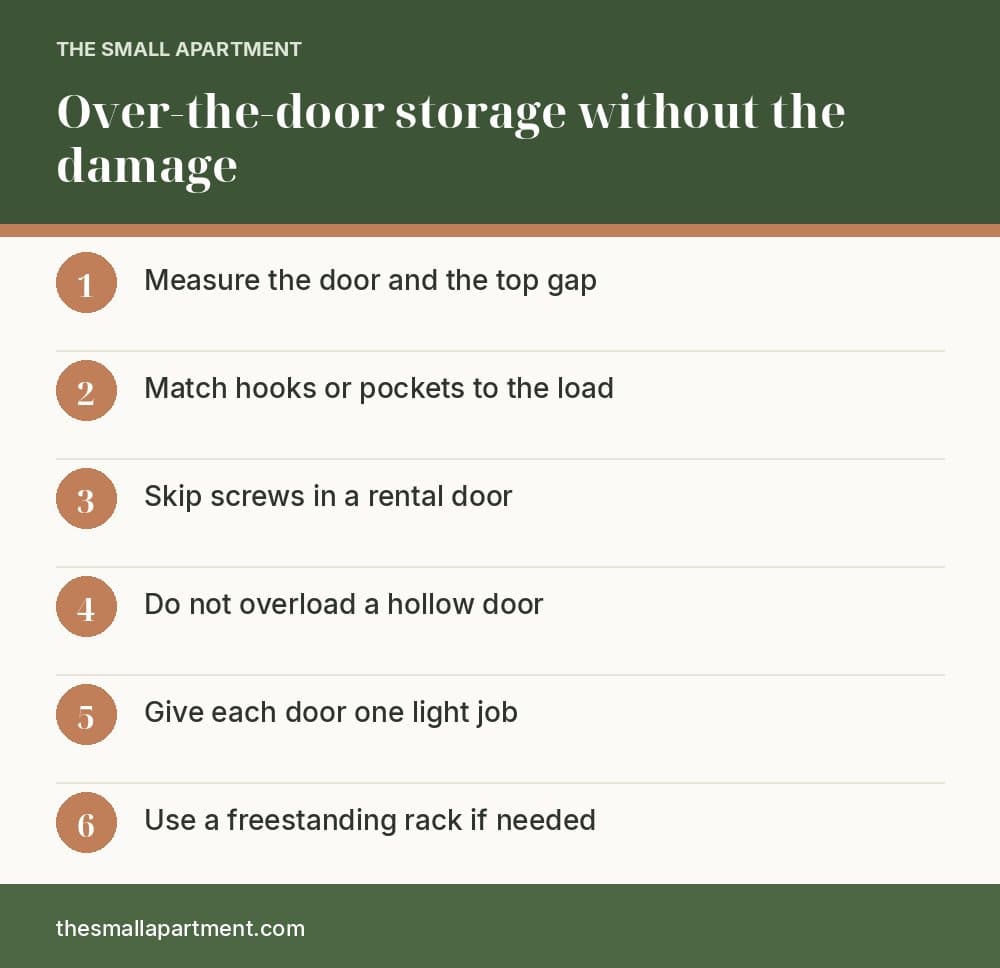
All-steps checklist for over-the-door storage that leaves the door intact.
How Do You Keep the Door Closing?
You are done when the coat has a hook, the door latches, and you did not put a hole in the paint. Measure once, hang less than you think the door can take, and let the closet hold the rest.
Will an over-the-door organizer damage an apartment door?
A hook-over rack usually will not, if it fits the thickness, the door still latches, and you do not overload one side. Felt on the back of the rack cuts down on rub marks. Screws and nails are the change that leaves a hole. Take the rack off when you move and wipe the top edge.
How do I know if a rack will fit my door?
Measure the door thickness and the gap between the top of the door and the frame. Many interior doors are about 1 3/8 inches thick, and some are 1 3/4 inches, so measure yours and compare it to the package. If a sheet of paper will not slide over the closed door, a thick hook will not fit. Slim, flat hooks are the ones made for a tight gap.
What can I hang on a hollow apartment door?
A coat, a hoodie, a tote, a robe, or a light towel rack is a normal load. A pocket organizer of scarves, mail, or flat pantry packets is fine if the door still closes. Skip a fully packed shoe organizer, a week of winter coats on one hook, and anything that makes the door swing by itself.
Can I use over-the-door storage if I cannot drill?
Yes. Hook-over racks, over-door hooks, and pocket organizers need no screws. They come off when you leave. A peg rail that needs screws belongs on a wall only with written permission, not on the door.
Which door should get the organizer?
Use a closet or bedroom door for coats, a bathroom door for towels if it still clears the vanity, and a pantry or cabinet door only for light packets. Leave the front door alone if the rack would show in the hall or stop the door from latching.
What if the rack rattles or the door will not latch?
The hook is probably too loose, too thick, or the load is pulling the door open. Try a slimmer hook, move weight to the middle, or take the rack off that door. A freestanding coat rack does the same job when the door cannot.
Get the small apartment checklist
One short email a week with a small-space fix that actually works in a rental. You also get our printable room-by-room checklist. No spam, unsubscribe anytime.