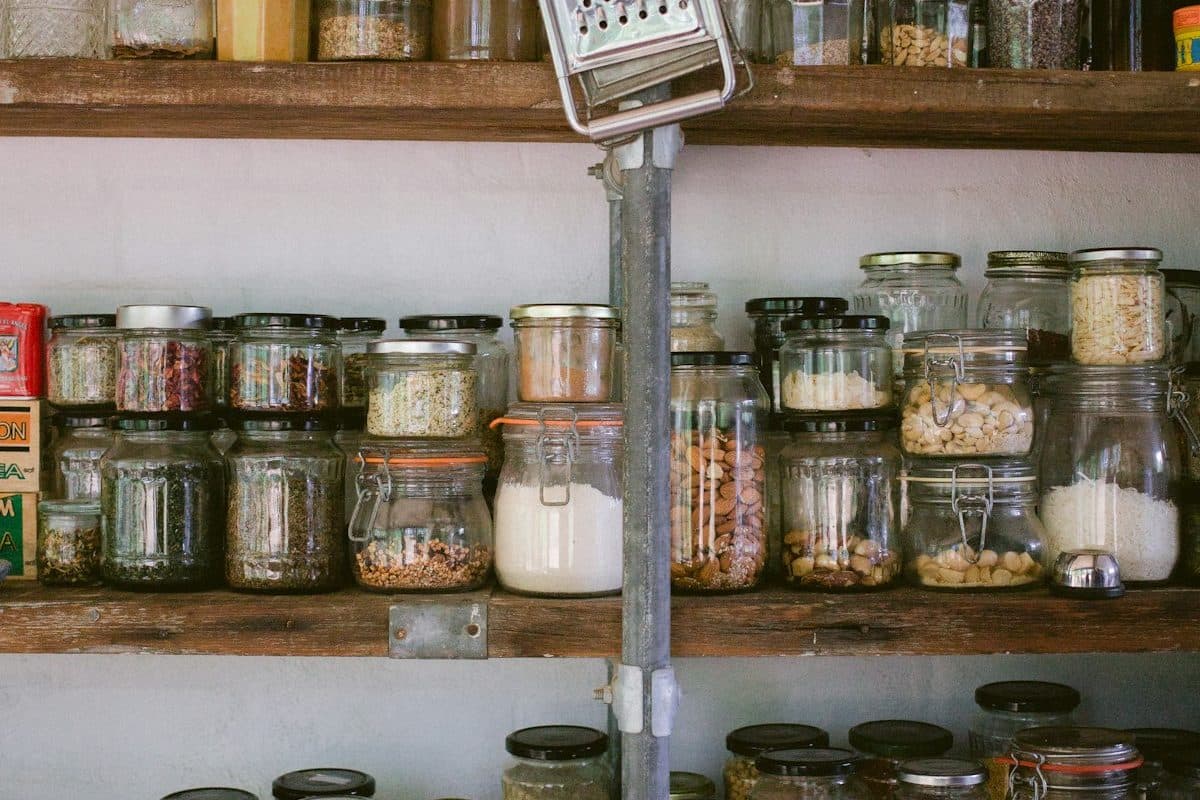
Tiny kitchen pantry shelves organized into labeled zones with clear jars, bins, and a simple restock basket. Photo via Unsplash.
A tidy pantry after a weekend clean-out feels great—until the next grocery run lands wherever there is a gap. Bags tip over, duplicates multiply, and “I’ll put it away later” becomes the back of the shelf.
A pantry organization system fixes that. It is not another purge. It is the ongoing structure: zones (where each category lives), bins and containers (how groups stay together), labels (how everyone finds things), and restock habits (how new food enters without chaos).
If your shelves are still a jumble of expired sauces and mystery bags, do the one-time reset for a small kitchen pantry first. Then use this article to keep that cabinet working week after week. If the jumble is the whole apartment, not just the food, start with how to declutter a small apartment before you label a single bin.
Costs are approximate ranges in USD based on typical big-box, discount, and secondhand prices. They vary by country and over time.
Key to labels:
🏠 Renter-friendly / no-drill — no holes, no permanent changes.
Approx. — rough cost range in USD.
Key takeaways
Zones beat aesthetics: store food by how you use it, not by matching jar color alone.
Put everyday items at eye level; backups and bulk lower or higher.
Choose containers by shelf depth and category—not one jar style for everything.
Label categories (and dates on opened goods) so anyone in the home can reset the shelf.
Restock with a running list and a first-in, first-out habit when new food arrives.
Spend roughly $20–$80 on bins and labels only after zones are decided.
What Makes a Pantry System (Not Just a Tidy Shelf)?
A clean-out answers: What do I keep?
A system answers: Where does the next bag of rice go—every time?
Backup bulk (extra paper goods or multipacks—if they live in the pantry at all)
2Step 2: Assign shelf real estate by frequency
Step 2. Give daily food eye level and heavy items the bottom.
Eye level: daily breakfast and cooking staples
Just below / easy reach: snacks and lunch items
High shelf: light backups, seasonal, rarely used appliances packets
Floor or lowest shelf: heavy drinks, potatoes/onions (if cool and dark enough), bulk
Door or side wall: spices, wraps, foil (with 🏠 over-door racks)
3Step 3: Draw a one-page zone map
Step 3. Sketch the zones and keep the map on the door.
Sketch your cabinet or closet shelves and label each zone. Stick the map inside the door for two weeks. When groceries arrive, the map—not memory—decides placement.
In a studio or one-wall kitchen, your “pantry” might be a single cabinet plus a rolling cart zone. Same rules: one category, one home.
Which Containers Belong in a Pantry Organization System?
Buy containers after zones exist. Otherwise you collect pretty jars that do not fit the shelf depth. The pantry container calculator shows how many of a common size fit, and a rough guideline for how much shelf a household needs.
Container types that earn their space
Airtight jars / canisters: open flour, sugar, rice, oats, cereal, coffee. Decant only what goes stale in bags. Approx. $3–$12 each, or reuse glass jars.
Open bins with handles: snack packs, seasoning packets, kids’ pouches, baking mixes. Easy to pull forward on deep shelves. Approx. $5–$15 each.
Turntables (Lazy Susans): oils, vinegars, sauces, small jars in corners. Approx. $10–$25. 🏠
Magazine files or narrow bins: upright foil, wrap, and bags. Approx. $5–$12.
Over-the-door spice or packet racks: frees shelf space. Measure door clearance first. Approx. $10–$25. 🏠 A drawer, a shelf, or that door rack is the choice in spice organization for a tiny kitchen.
What you can skip
Decanting every box into matching containers (time-consuming; boxes already stack)
Giant sets that overhang your shelf depth
Lids you cannot open with one hand while cooking
US vs UK note: In the US, stackable plastic or glass canisters from big-box stores are easy to find; in the UK and AU, supermarket own-brand jars and square clip-top containers work the same way. Measure shelf depth in centimetres or inches before you buy.
Labels are how a system survives housemates, partners, and tired weeknights.
Label zones, not every pasta shape
On a small shelf, “Grains & Pasta” on the bin is more useful than twelve tiny labels. Save item-level labels for jars that look alike (flour vs sugar vs baking powder).
Add dates where it matters
Write opened on (and best-by if you transfer from a bag) on oats, nuts, flour, cereal, and cooking oils. Masking tape and a marker are enough; waterproof pantry labels last longer in steamy kitchens. Approx. $0–$15.
Keep labels readable
Large enough to see without moving the bin
Same style across the pantry so it feels calm
Category names you actually say (“Breakfast” beats “AM Fuel”)
Renter tip: Removable label stickers or washi tape leave less residue on bins you will take to the next flat. 🏠
How Do Restocking and Maintenance Work?
The put-away rule (every grocery trip)
Take new items out of bags the same day.
Place them in their zone, not in a random gap.
Move older items to the front (first-in, first-out).
Update the running list when you open the last of something.
The running list
Keep a notepad, magnetic pad, or phone note titled by zone. When you finish the oats, write “oats” under Breakfast. Shopping becomes refilling the system, not guessing.
All-steps checklist for a pantry organization system in a tiny kitchen.
How Does the Pantry Stay Usable After Groceries?
The goal is not a showroom of identical jars. It is a tiny kitchen where dinner ingredients show up in the same place every time, snacks stop multiplying, and the shopping list writes itself. Map zones, add only the containers each zone needs, label simply, and restock on purpose.
Pinterest pin: Pantry organization system with zones bins and labels over jar shelves
Pinterest pin: Numbered pantry zoning tips for tiny kitchens
Frequently asked questions
What is a pantry organization system?
It is the repeatable structure you use every week: named zones for categories of food, containers that keep those categories together, labels that make the zones obvious, and a restock routine so shopping refills the right spots. It is different from a one-time clean-out.
How do I zone a small pantry?
Give each category a fixed home based on how often you use it. Everyday breakfast and cooking staples at eye level, snacks in one contained zone, baking together, cans together, and backups on higher or deeper shelves. Write the zone map on a sticky note until it becomes habit.
What containers work best in a tiny pantry?
Use a mix: airtight jars or canisters for open dry goods, open bins with handles for packets and kids’ snacks, a turntable for oils and sauces, and risers for cans. Matching everything is optional; fitting your shelf depth matters more.
How should I label a pantry?
Label the zone or bin (Breakfast, Grains, Snacks) rather than every single item when space is tight. Add a small opened-on date to jars of flour, cereal, and nuts. Use waterproof labels or a label maker if humidity is high.
How do I keep a pantry system from falling apart?
Put new groceries into their zone the day they come home, move older items to the front, keep a running shopping list on the fridge or phone, and do a 10-minute monthly check to wipe shelves and catch anything near its date.
Is this different from a pantry clean-out?
Yes. A clean-out empties, edits, and resets the space once. A system is what you follow afterward so the pantry stays usable. If you still need the deep reset, start with our step-by-step small pantry clean-out, then return here for zones and maintenance.
Get the small apartment checklist
One short email a week with a small-space fix that actually works in a rental. You also get our printable room-by-room checklist. No spam, unsubscribe anytime.