Small kitchen organization ideas are the few tools that fit the cabinets you already have. These 10 small kitchen organization ideas each name one thing to buy or one place to use, plus a size or a price. Jars show up once. A shelf shows up not at all, because a second shelf of the same jars is not a new idea. Check the container size and the shelf depth before you order a row of containers. Rough prices are 2026 shop ranges. If it does not fit a drawer, a door, or one counter gap, it does not come home. These ideas stay in the drawers you have, not on a new cart.
Budget Decor
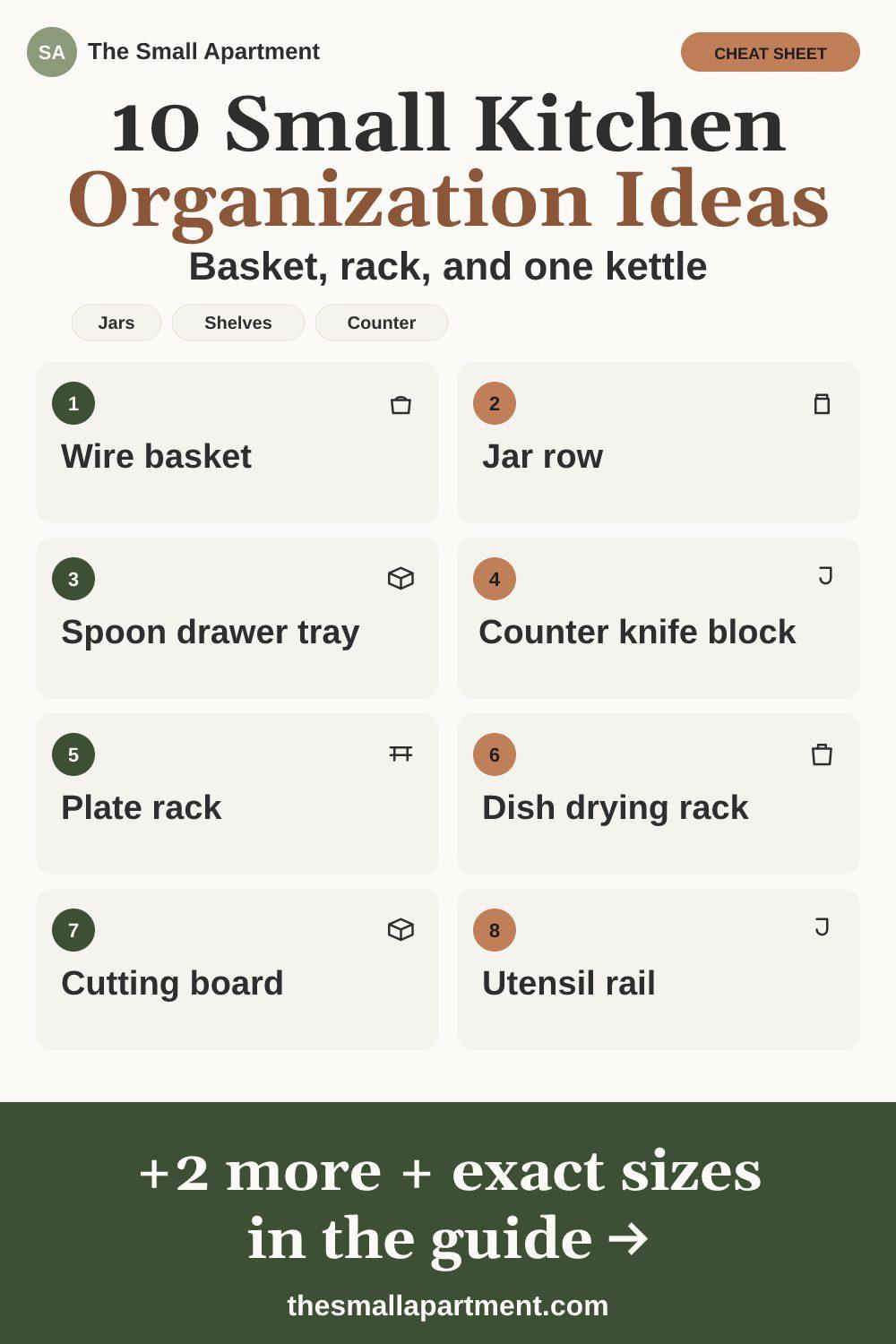
10 Small Kitchen Organization Ideas for Small Apartments
By The Small Apartment team · Published · Updated
Key takeaways
- One row of jars. A second row of jars is the same idea.
- A drawer tray for spoons, and a knife block that sits on the counter.
- A plate rack and a dish rack are different tools. You can own both.
- The daily container lives at chest height so you stop stacking.
1. A wire basket for what you use daily

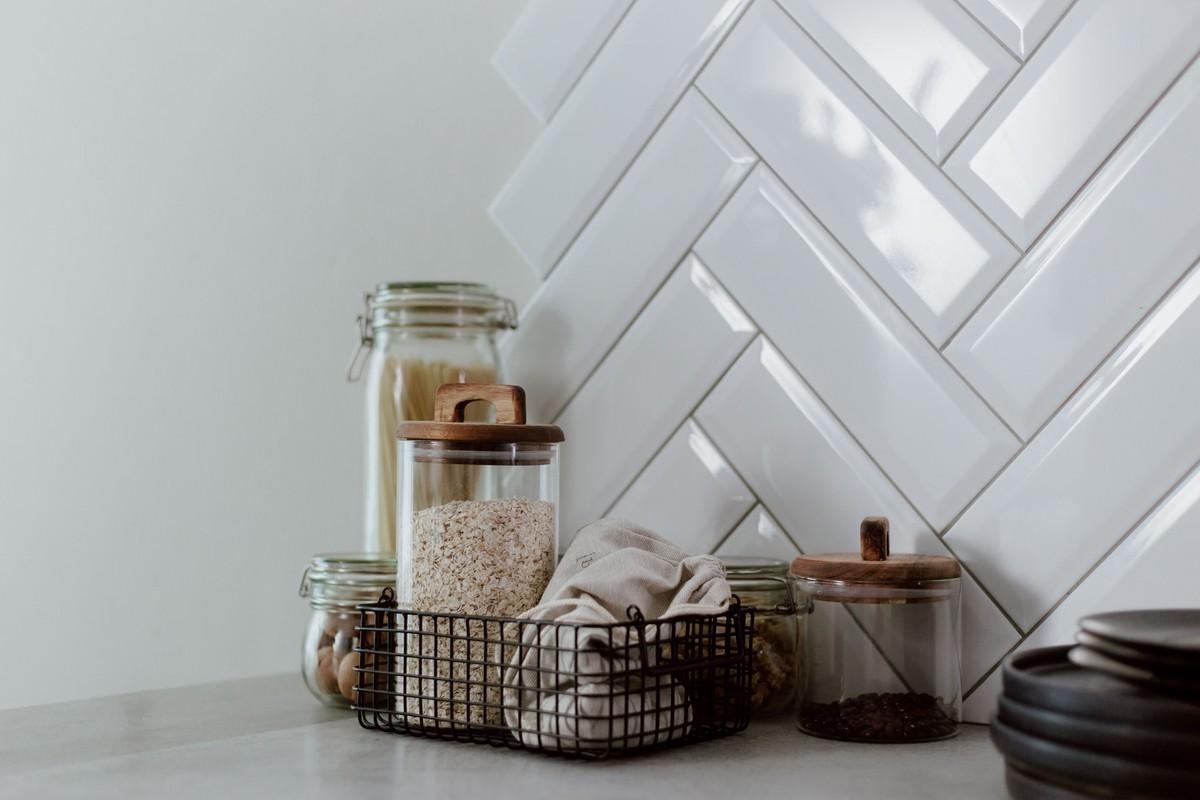
A wire basket for what you use daily keeps oats, coffee, and the napkin you actually grab in one lift. A basket about 12 inches wide, often $12 to $25, sits on the counter or on the one open run you already have. It is the daily set. Everything else can live behind a door. Do not add a second basket for "the pretty jars." That is the same basket idea with a different load. The wire lets you see what is low. When you move, the basket goes in a tote. It is not mounted. One basket is the limit in a kitchen that is already short on counter. If it does not fit beside the kettle, it is too big. If the basket hides what is inside, you will buy a duplicate. See-through wire avoids that.
2. One row of jars, nothing stacked

One row of jars, nothing stacked, is the only jar idea. A jar about 4 inches wide holds a week of rice or cereal for two people, and a matched set of four is often $20 to $40. Put them in one line you can read without moving a jar off the top of another. A second row, a spice set in different jars, and a labelled mason set are the same idea three times. Pick one row. Decant what you use weekly. Leave the rest in the bag it came in, inside the cabinet. Measure the counter or the cabinet depth before you buy a jar that is too tall to stand. The lids stay on. The row leaves in a box when you move. Write the contents on the lid only if you cannot see them. Clear glass usually does not need a tag.
3. A drawer organizer for the spoons

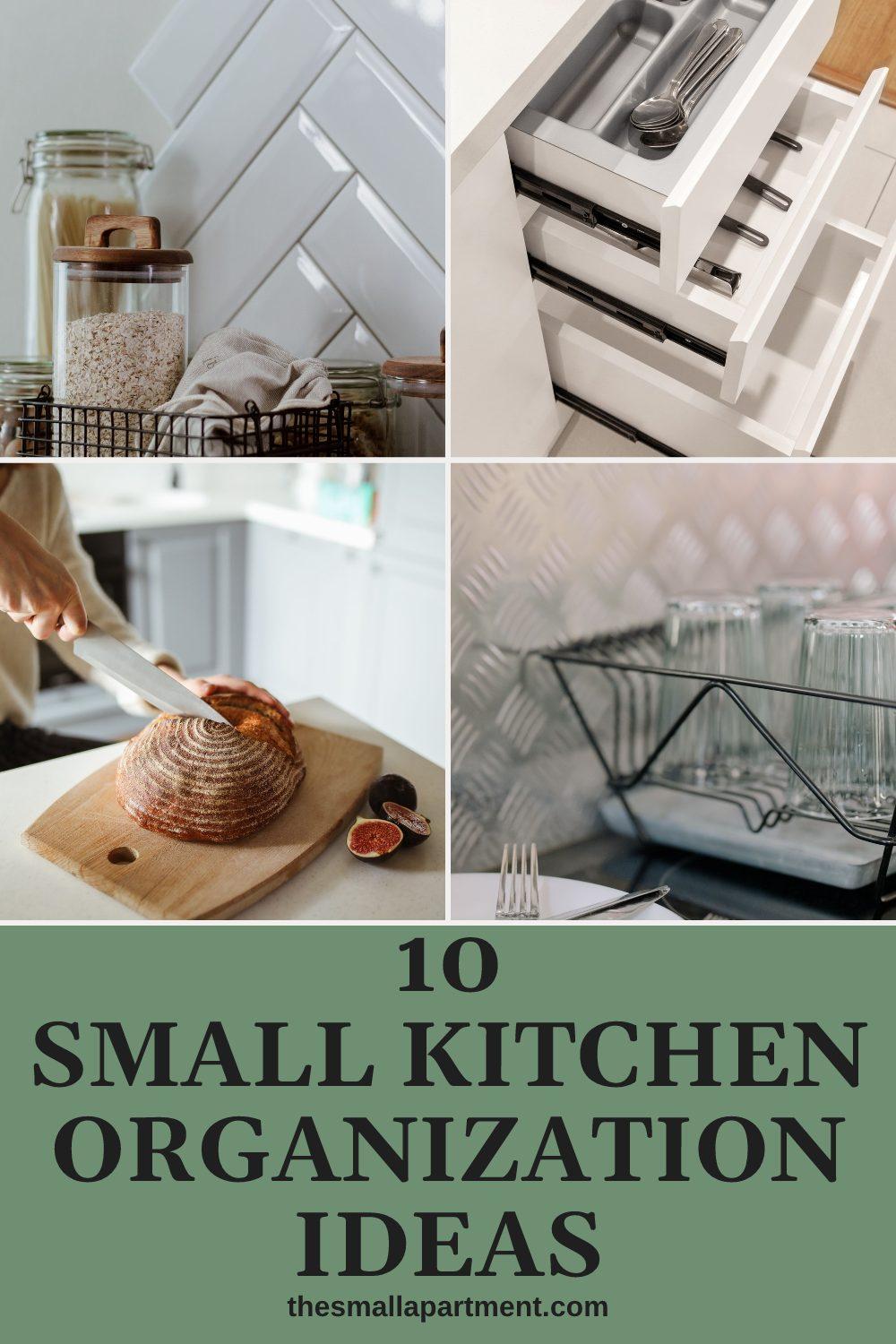
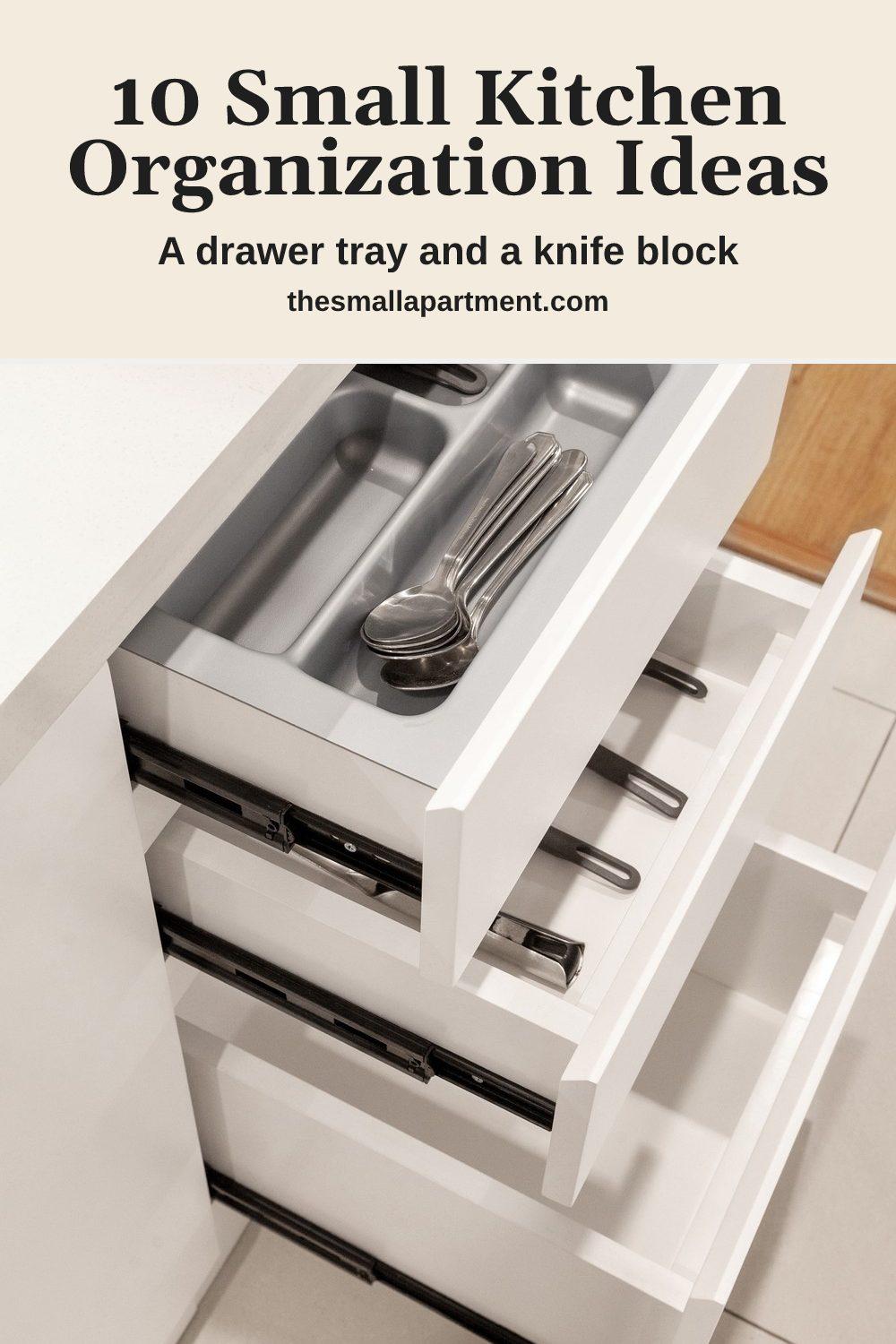
A drawer organizer for the spoons keeps the forks from living in a pile. A tray about 12 inches long, often $8 to $18, drops into the drawer you already open. Measure the drawer box, not the front, because the front is wider than the inside. A tray that is 1 inch too wide will not sit flat. This is not a knife idea. Knives stay in the block. The tray is for spoons, forks, and the one spatula that fits a slot. Do not buy a second tray for a drawer you do not have. One drawer, one tray. It comes out when you move, and it costs less than a new drawer. A jumble in the slot means the tray is the wrong size. Swap it before you add a second tray.
4. A knife block on the counter

A knife block on the counter is the renter version of a magnetic strip. A block that holds four or five knives, often $20 to $45, sits on the counter and needs no screws. A strip on the tile looks neat and leaves holes the lease will charge you for. Use the block unless the lease says you can drill. The block takes about 6 inches of counter. If that gap does not exist, the knives stay in the drawer tray, and you skip the block. Do not buy both a block and a strip. One home for the knives. The block goes in a box when you move. Point the blades down or into the slots, not loose in a drawer. Wipe the block when you wipe the counter. A damp block rusts the blades.
5. A plate rack for everyday plates

A plate rack for everyday plates holds the four plates you actually use. A counter rack about 10 inches wide, often $15 to $35, stands on the counter and needs no screws. The rack in many photos is screwed into the tile. That version is fine if you own the place. In a rental, buy the freestanding one unless the lease allows the holes. Plates stand on edge, so a stack does not slide. This is not the dish rack. Wet plates drip. Dry plates live here. One rack for the everyday set. The guest plates stay in the cabinet. Measure the plate diameter. A dinner plate over 10 inches may not fit a small rack. Four everyday plates, not the whole set you own. The rest stay stacked in the cabinet. Dry the plates before they go in the rack so the wood does not swell.
6. A wire dish rack

A wire dish rack is where wet plates dry. A rack about 16 inches wide, often $15 to $30, sits beside the sink and replaces a towel spread across the counter. It is not the plate rack. One is for drying. One is for the plates you put away. If the counter beside the sink is under 12 inches, look for a rack that sits over the sink basin instead. Many do, for about the same price. Do not add a second drying rack on the other side of a kitchen this small. One rack, emptied every night, is the system. It is wire, so it does not stay wet. It packs flat when you move. Empty it before bed so the counter is clear in the morning. A full rack is a second counter.
7. One cutting board

One cutting board is the board that lives out. A board about 16 inches long, often $15 to $35, covers a small prep spot. If the sink is a single bowl, a board that spans it is often 16 to 20 inches and frees the counter. That over-sink board is the same idea, not a second board to own at the same time. Pick one. Store it on edge beside the dish rack, not flat under a pile. A second board for "bread only" waits until you have a drawer for it. Wash it and stand it up so it dries. It is not mounted. You carry it out. One board on the counter is the rule. Stand it on edge overnight. A flat wet board warps, and then you buy another.
8. A rail for the utensils

A rail for the utensils holds the three spoons you use while the pan is hot. A rail about 16 inches long, often $12 to $28, can be a tension bar inside a cabinet door or a bar that hangs on the door with hooks, so you do not drill the tile. If the only rail you can find is screwed in, skip it in a rental. The drawer tray already holds the everyday set. The rail is for the ones that stay out. Do not hang the knives here if they already have a block. One rail. A second rail on the backsplash is how the wall fills up with tools you use once a month. Three tools on the rail is the max. A fourth one belongs in the drawer. Hooks that slide let you change the order without a screwdriver.
9. One electric kettle

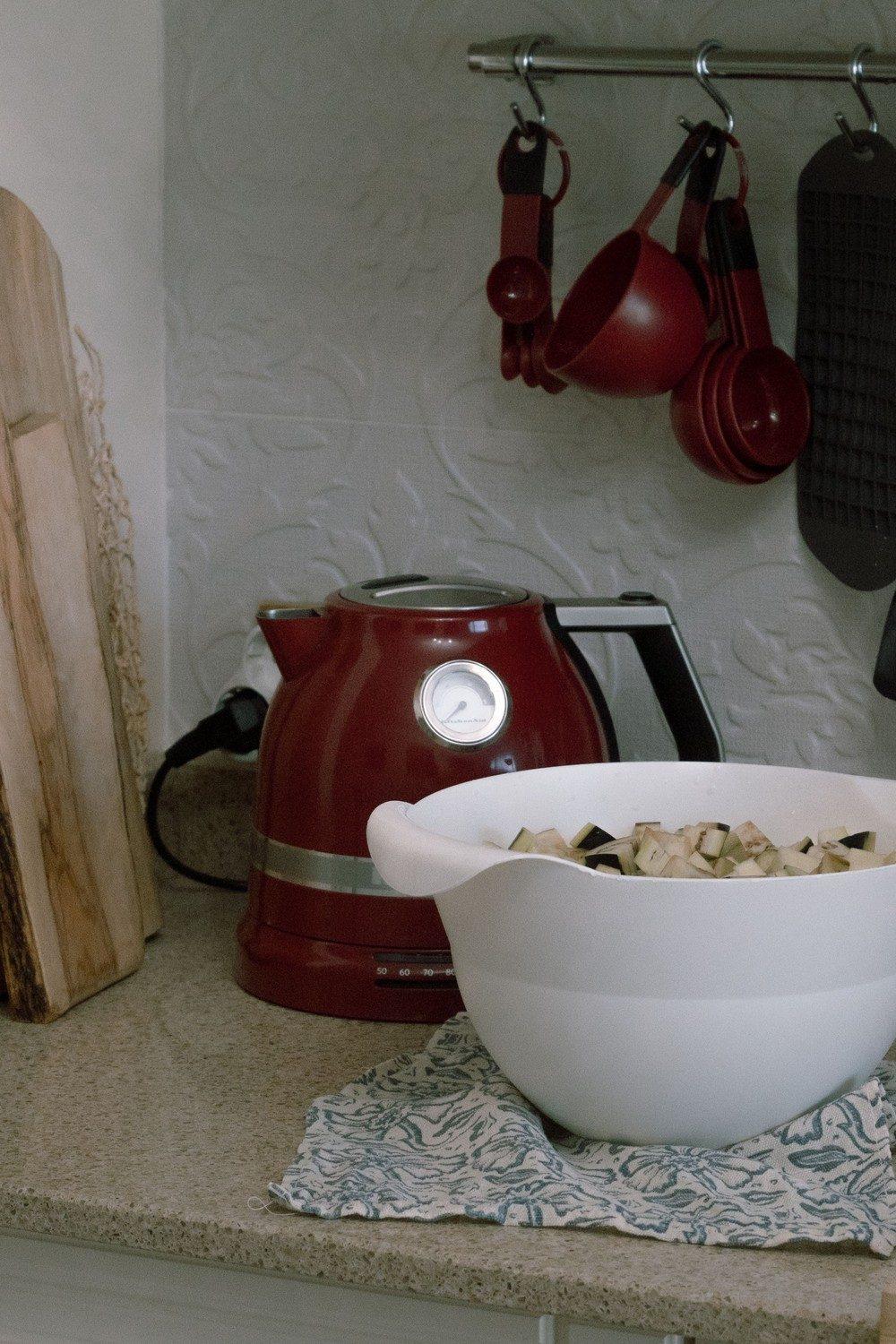
One electric kettle is the small appliance that earns its counter space. A kettle about 7 inches wide, often $25 to $50, boils water without a pot on a stove that is already crowded. A toaster plus a kettle plus a blender is three appliances, and a small counter fits one. Pick the kettle if you drink tea or coffee every day. The others live in a cabinet and come out when you use them. Leave about 4 inches behind the kettle so the cord is not pinched. One outlet, one kettle. Do not add a second kettle "for the office" in a one-room apartment. Unplug it when you leave for more than a day. Fill it only as full as you will drink. A full kettle is slow and heavy on a small counter.
10. The daily container at chest height

The daily container at chest height is the one you can grab without a stool. Chest height is about 48 to 60 inches from the floor for most adults. Put the coffee, the oats, or the pasta you use tonight on that level. The once-a-month items go above it or below it. This is a placement, not a new set of containers. You already bought the one row. Moving the daily one to the front of that height stops the stack. If you cannot reach it flat-footed, it is too high, and it will not get used. A step stool in a tiny kitchen is a trip. One container in reach beats a full cabinet you never open. Move it tonight, before you buy anything else. Placement costs nothing and fixes the daily reach.
Save for later
Frequently asked questions
- How do you organize a small apartment kitchen?
- Use one basket for what you touch daily, one row of jars, a drawer tray, and a dish rack. Keep the daily container at chest height.
- Do I need more than one set of jars?
- No. One row, nothing stacked, is the jar idea. A second set of jars for spices is the same idea again.
- What can a renter add without drilling?
- A knife block on the counter, a dish rack, a drawer tray, and a basket. A plate rack that is screwed into tile only if the lease allows the holes.
Get the small apartment checklist
One short email a week with a small-space fix that actually works in a rental. You also get our printable room-by-room checklist. No spam, unsubscribe anytime.