Small apartment ideas make one room do the work of two: a place to sit, a place to eat, and a path between them. These 14 small apartment ideas are each a different thing to buy or do. The same pieces work as small apartments ideas when you are comparing layouts, and as apartment decor you can carry out on moving day. A path about 30 inches wide is the rule. If a piece lands in that path, it does not come home. Rough prices are 2026 shop ranges.
Small Apartment Organization
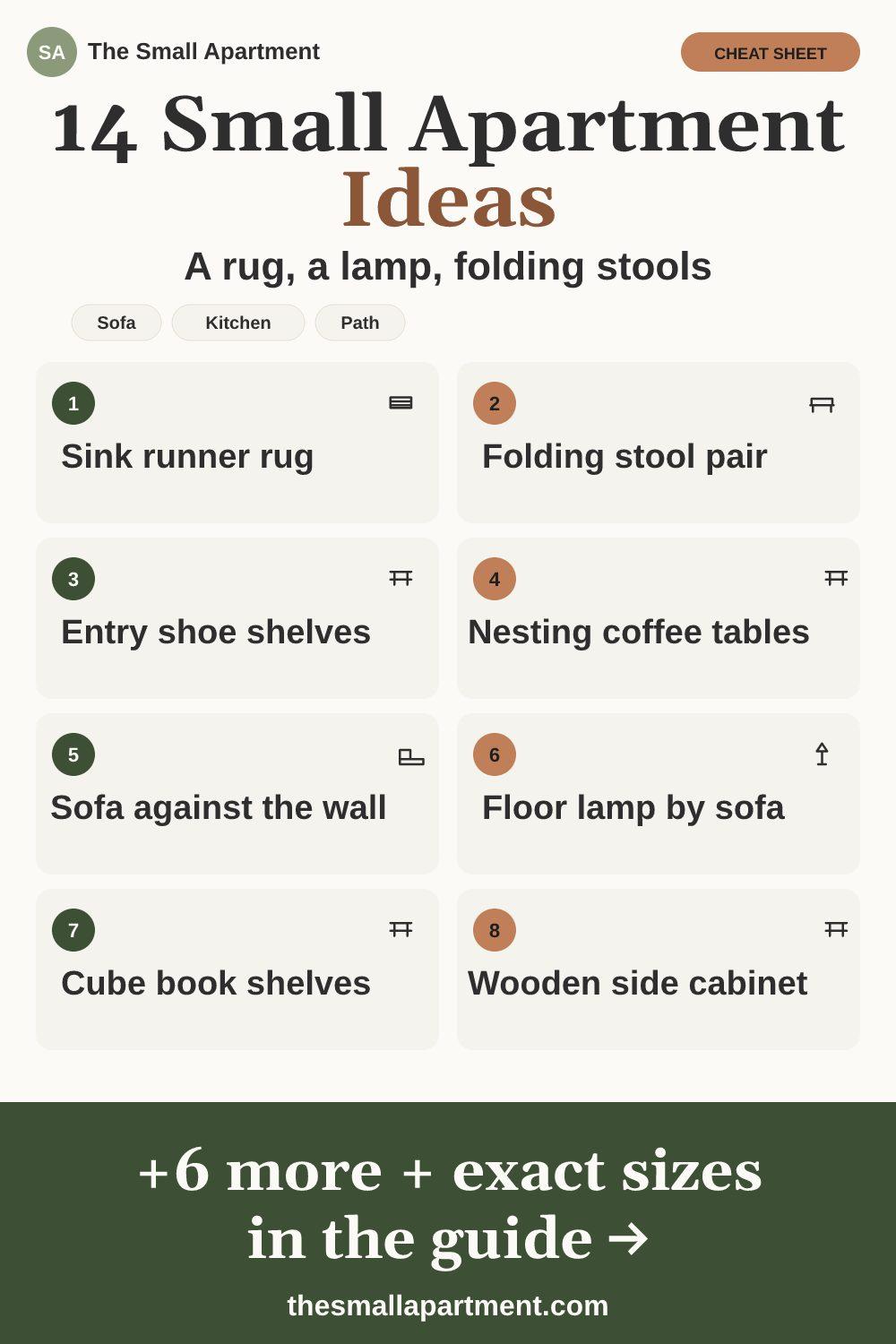
14 Small Apartment Ideas That Make One Room Work
By The Small Apartment team · Published · Updated
Key takeaways
- One sofa on one wall. A second sofa is the piece that blocks the path.
- Folding stools, not a second dining set.
- Nesting tables slide under each other when you need the floor.
- A runner at the sink is not a rug for the whole room.
1. A sofa on one wall

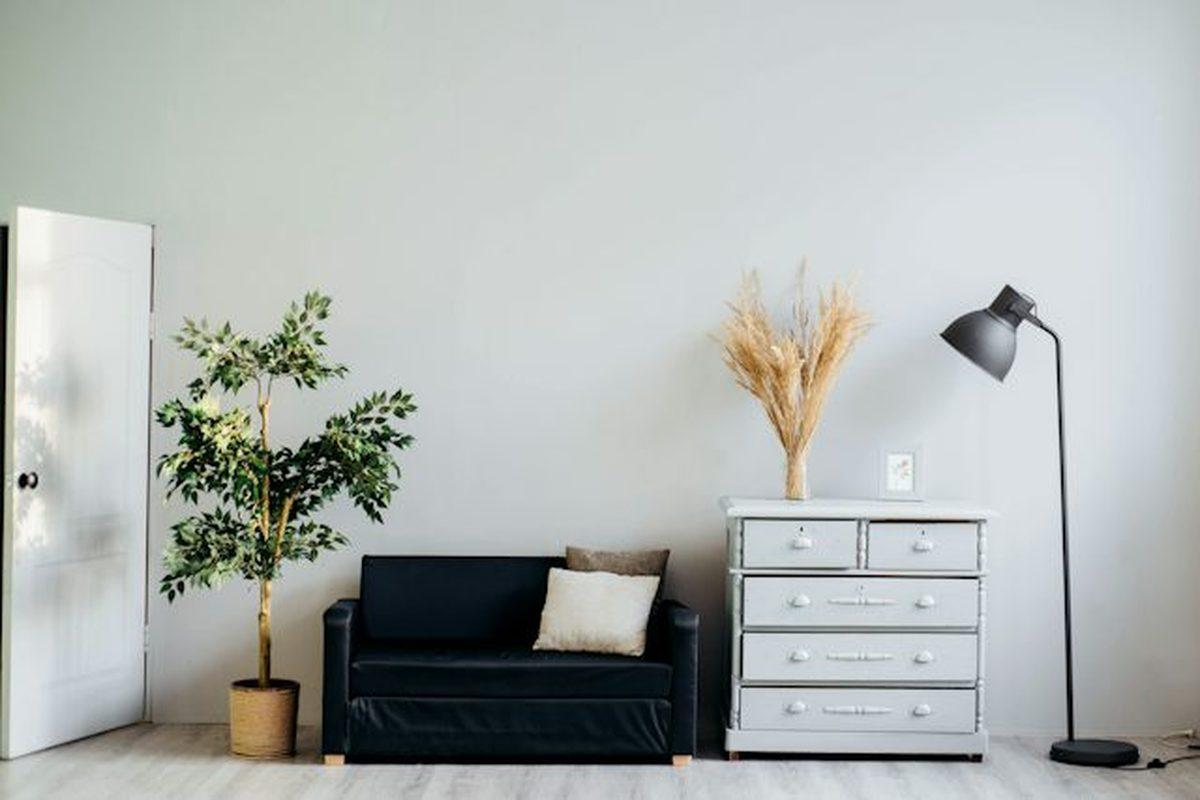
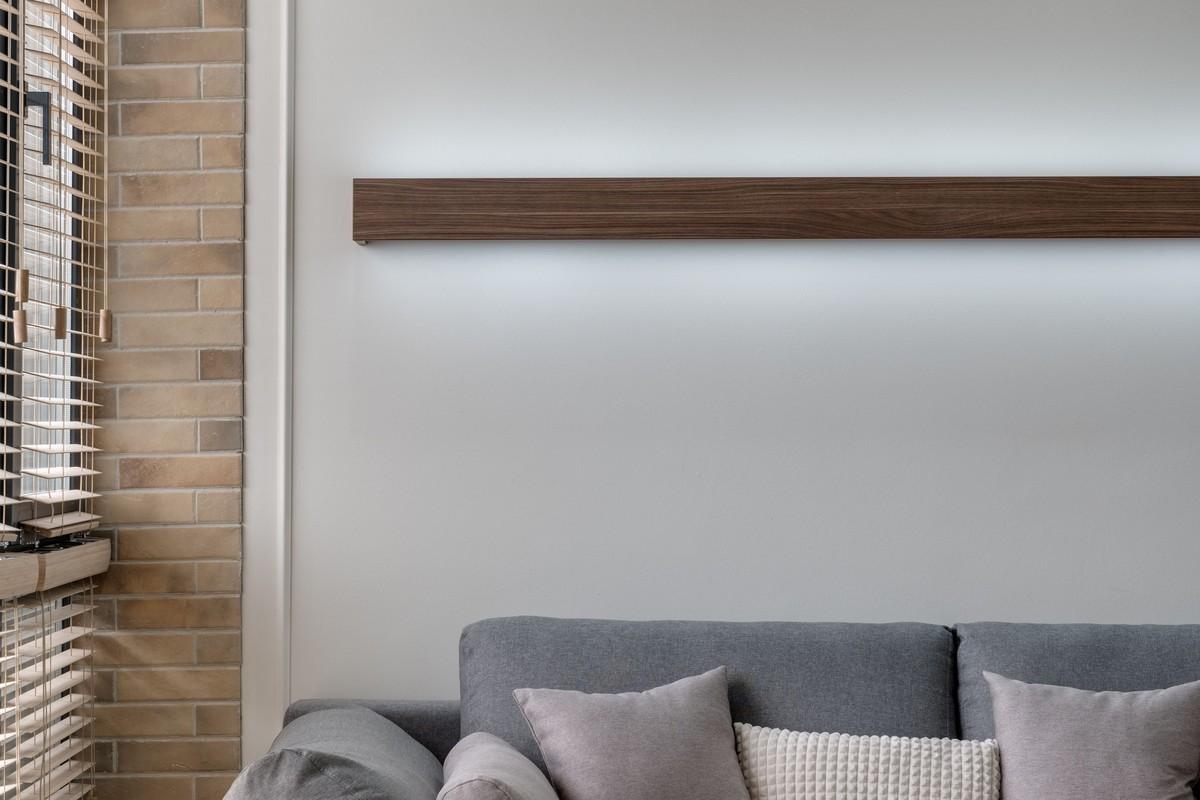
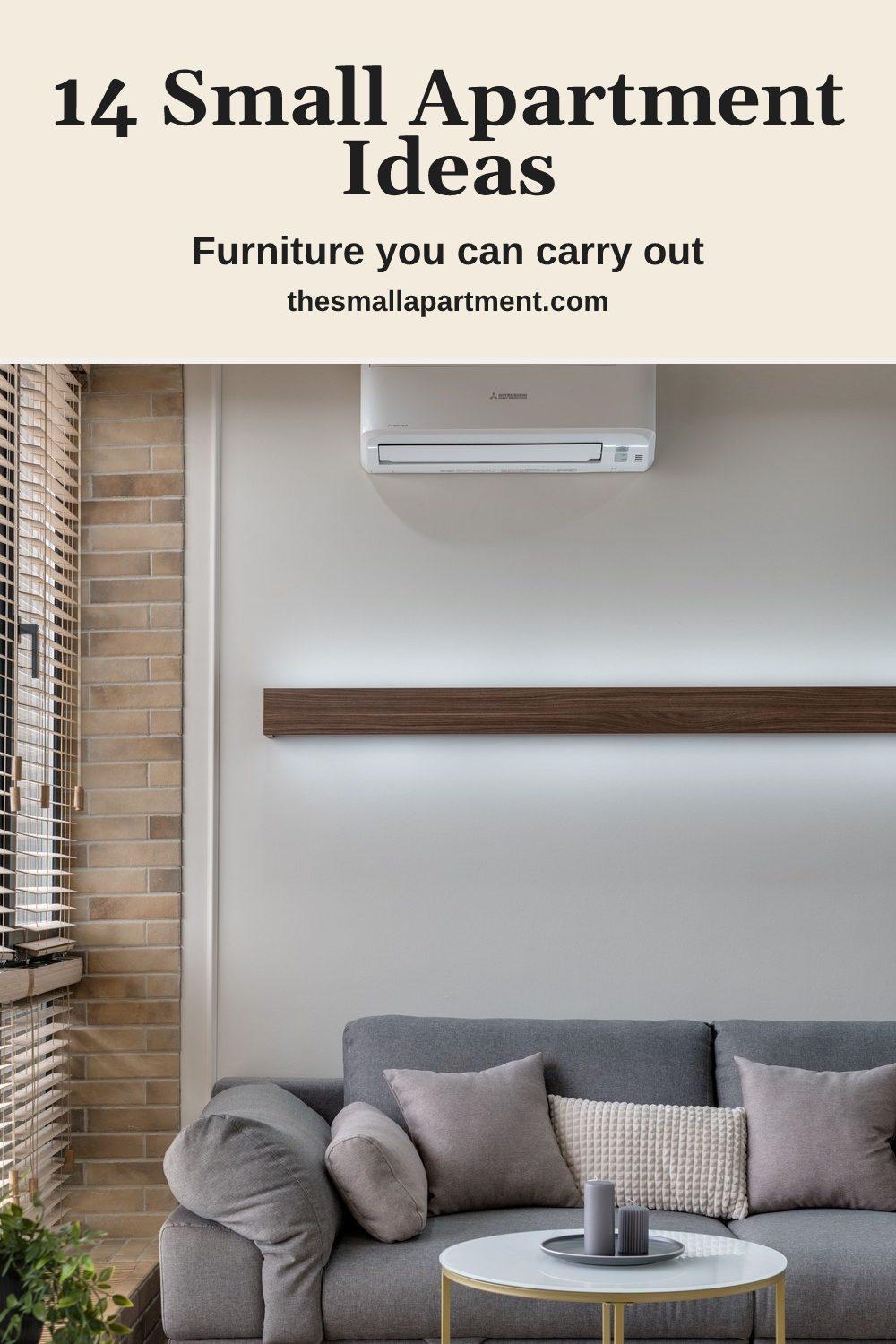
Put one sofa against a wall, not floating in the middle and not facing a second sofa you do not have room for. A sofa about 70 to 80 inches long, often $300 to $700, fits the wall opposite the kitchen or the window. Leave the 30 inch path in front of it. A loveseat around 60 inches is the better buy if the tape says 80 inches would touch the table. Do not add a second sofa, a chaise, and two armchairs. That is a living room you are not renting. One seat for two people, and the stools at the table cover a guest. Renter-friendly: yes. It stands on the floor and leaves with you.
2. A table for two

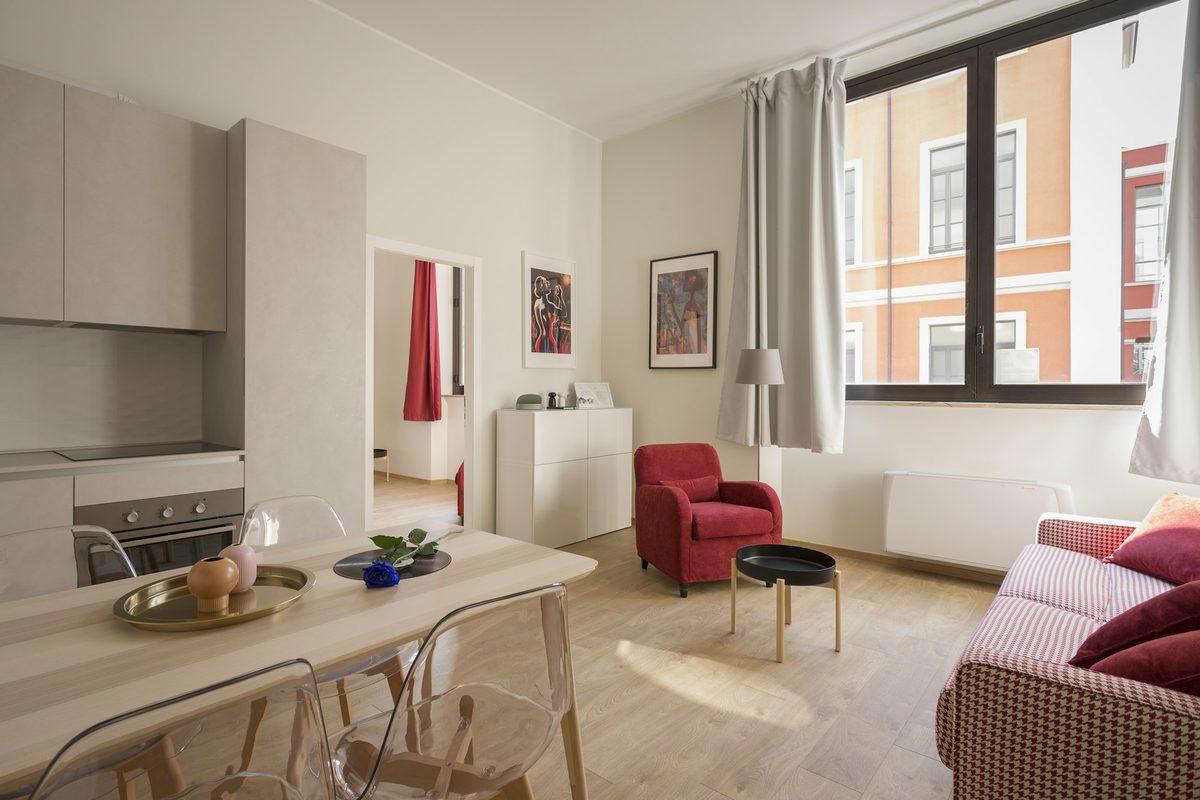
A table for two is the dining set. About 30 to 36 inches across, often $80 to $200, it seats the two of you without becoming a conference table. Push it to a wall or to the end of the counter so the path stays open. Two chairs, not four. A drop-leaf is useful if you sometimes need a third seat, and it folds back to about 10 inches deep. This is the only dining table. The nesting tables later are a different object, for the sofa, and they are not a second place to eat. Measure the chairs pulled out, about 18 inches, before you decide the table fits. Renter-friendly: yes.
3. Nesting tables on the rug

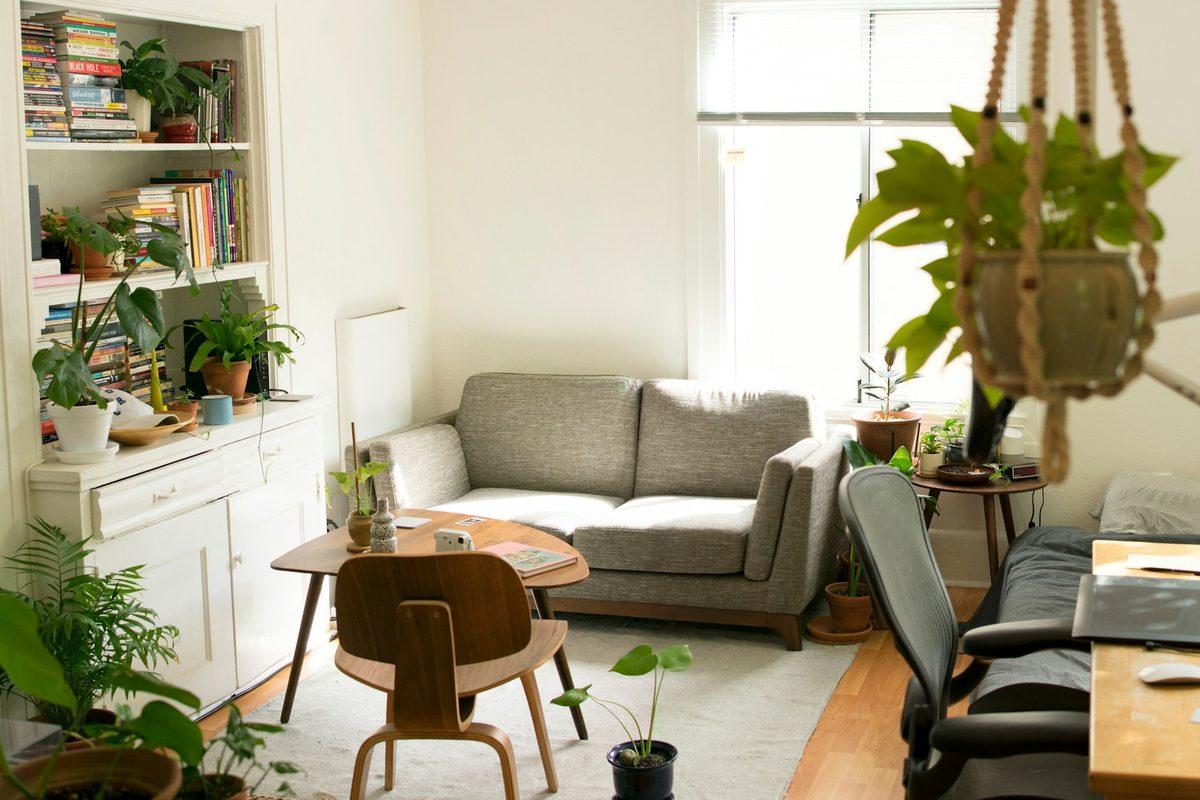
Nesting tables are the coffee table that disappears. A set of two, the larger about 16 to 20 inches square, is often $40 to $120. They sit on the rug in front of the sofa, and you slide the smaller one under the larger one when someone needs to walk through. That is the whole trick, and it is why they are not the same idea as the dining table. Do not buy a 40 inch coffee table that cannot move. In a room this size it becomes a hurdle. The stools in this photo belong to the counter, which is a later idea. The nesting set is what you are buying here. Renter-friendly: yes.
4. A rug that stops at the seat

One rug defines the seating area and then stops. A 5 by 7 foot rug, often $40 to $150, fits in front of a sofa if the front legs sit on it and the path beyond it stays bare floor. A rug that runs under the dining table and the sofa and the kitchen is a trip hazard and a thing you cannot wash in a machine. The rug size calculator checks the rectangle against the floor you measured. The lamp in this photo is the next idea, not part of the rug. Buy the rug for the size, not because the photo has a lamp on it. Renter-friendly: yes. It is not stuck to the floor.
5. A floor lamp beside the seat

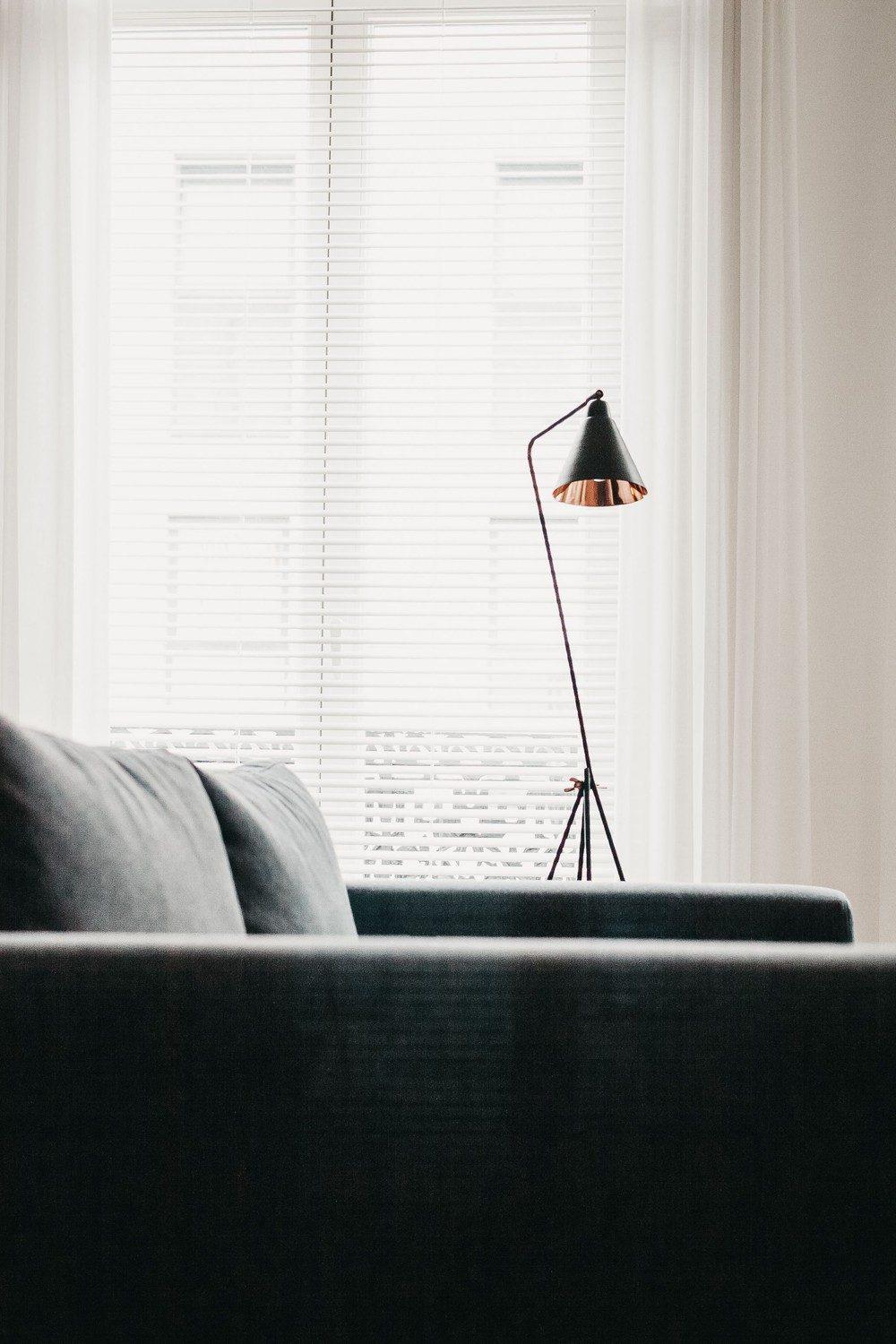
One floor lamp is the light you add. A lamp about 60 inches tall, often $30 to $80, stands beside the sofa and plugs into the outlet that is already there. It does not hang from the ceiling, and it does not need a hook. This is the only lamp on the list. A lamp on the dining table, a lamp on a shelf, and this one would be the same idea three times. Pick this one. Put it where the shade is not in the 30 inch path. A swing-arm that bolts to the wall is the version to skip in a rental. Renter-friendly: yes for the plug-in lamp. No for a wall mount.
6. Shoe shelves by the door

A shoe shelf at the door keeps pairs off the floor you walk on. A unit about 24 inches wide and 12 inches deep, often $25 to $60, holds four to six pairs in two rows. It stands against the wall or inside the wardrobe if the bottom is empty. Do not line shoes along the path from the door to the sofa. That is how a small room feels smaller. One shelf. A second shelf in the bedroom is the same object again, so use the one by the door and put the off-season pairs in a box on top. Renter-friendly: yes. No screws.
7. Cube shelves for the books

Cube shelves hold books and a few objects, and they can hang on the wall you are allowed to use or stand on the floor if the lease says no holes. A set of cubes about 12 inches each, often $40 to $100 for six, replaces a bookcase that is 36 inches deep and eats the path. The bed in this photo is the studio sleeping spot, which is its own idea later. The cubes are what you buy here. Do not also buy a tall bookcase for the same books. One home for the books. If a cube is deeper than 12 inches, check it against the path before you mount it. Renter-friendly: yes if it stands, or if the lease allows the anchors.
8. A cabinet beside the table

A low cabinet next to the table holds the things that do not fit in the kitchen: placemats, a spare pan, the board games. About 30 inches wide and 16 inches deep, often $80 to $200. It is not a second wardrobe and it is not a second dining table. The top can hold a lamp you already own, but do not buy a lamp for it. The floor lamp is the light. Leave the cabinet off the 30 inch path. If the only spot is between the table and the door, the cabinet is too big and you want a smaller one, not a different room. Renter-friendly: yes. It lifts out.
9. A bed in the studio

In a studio the bed is the largest object, so it goes on a wall and the kitchen keeps the path. A double is about 54 by 75 inches. A queen is 60 by 80 and only works if the tape still shows 30 inches to the counter. Often the double is the honest choice, and a frame is $100 to $300. Do not put the bed in the middle. Do not add a daybed and call it a second sofa. You already have the sofa. The bed is for sleeping. A curtain on a tension rod can mark the corner if you want, and the tension rod calculator sizes that rod. Renter-friendly: yes.
10. A runner in front of the sink

A runner in front of the sink is a small rug for the splash, not a second living-room rug. About 20 by 48 inches, often $15 to $40, it lies where you stand to wash up and it goes in the wash. It is not the 5 by 7 under the sofa. Two different sizes, two different jobs. Do not buy a third rug for the entry. The shoe shelf already handles the door. If the runner slides, a washable pad that is not glued down is enough. Glue and permanent tape are how a rental floor gets damaged. Renter-friendly: yes.
11. Folding stools at the counter

Folding stools are the seats at the counter or the small table. A stool about 18 inches wide, often $30 to $70 each, folds to a few inches and hangs on a hook or slides under the counter. Two stools, not four. Four stools around a table was the repeated idea, the same seat counted twice because the photo showed more of them. Buy the pair. When you are not eating, they are out of the path. A stool that does not fold and does not tuck will sit in the 30 inch walkway, which means it is the wrong stool. Renter-friendly: yes.
12. A wardrobe in the studio

A freestanding wardrobe is the closet when the studio did not come with one. About 36 inches wide and 24 inches deep, often $200 to $450, it stands against a wall that is not the path from the bed to the door. Split the rod if two people share it. The closet rod height calculator keeps shirts off the floor of the wardrobe. Do not buy a second one to match the first. If a closet is already built in, use that and skip this purchase. The bed in the photo is the studio bed from the earlier idea. The wardrobe is the new object. Renter-friendly: yes. No screws into the wall.
13. A clear path past the counter

Leave the path past the counter empty. That is a thing you do, not a thing you buy, and it is the idea people skip because it does not look like a product. The path is about 30 inches, from the entry to the sink and past the sofa. A cart, a trash can pulled out, and a chair that does not tuck all fail it. Slide the can under the sink. Fold the stools. Do not add a kitchen island. An island in a room this size is a wall. If you cannot walk the path with a bag in your hand, something on the list has to go, usually the last piece you bought. Renter-friendly: yes. You are removing, not drilling.
14. Open shelves for the dishes

Open shelves for the dishes use the wall above the counter so the cabinet is not the only place a plate can go. Two or three shelves about 24 to 36 inches long and 8 inches deep, often $30 to $80 if they are a bracket set the lease allows, hold one row of plates and the glasses you use. One row. A stack that hides the back of the shelf is how you stop using the thing in the back. These are not the book cubes. Books and dishes are different shelves in different rooms, or on different walls. If you cannot drill, a counter stand from the kitchen list is the substitute. Renter-friendly: only if the lease allows the brackets, or if the stand sits on the counter.
Save for later
Frequently asked questions
- What furniture belongs in a small apartment?
- One sofa, a table for two, nesting tables, a rug, and a lamp. Leave a path about 30 inches wide through the room.
- How do you make one room work as a living room and a kitchen?
- Put the sofa on the wall opposite the counter, keep folding stools at the table, and do not add a second sofa.
- What can a renter take when they move?
- The sofa, the nesting tables, the lamp, the rug, and a wardrobe that stands on the floor. Skip anything screwed into the tile.
Get the small apartment checklist
One short email a week with a small-space fix that actually works in a rental. You also get our printable room-by-room checklist. No spam, unsubscribe anytime.