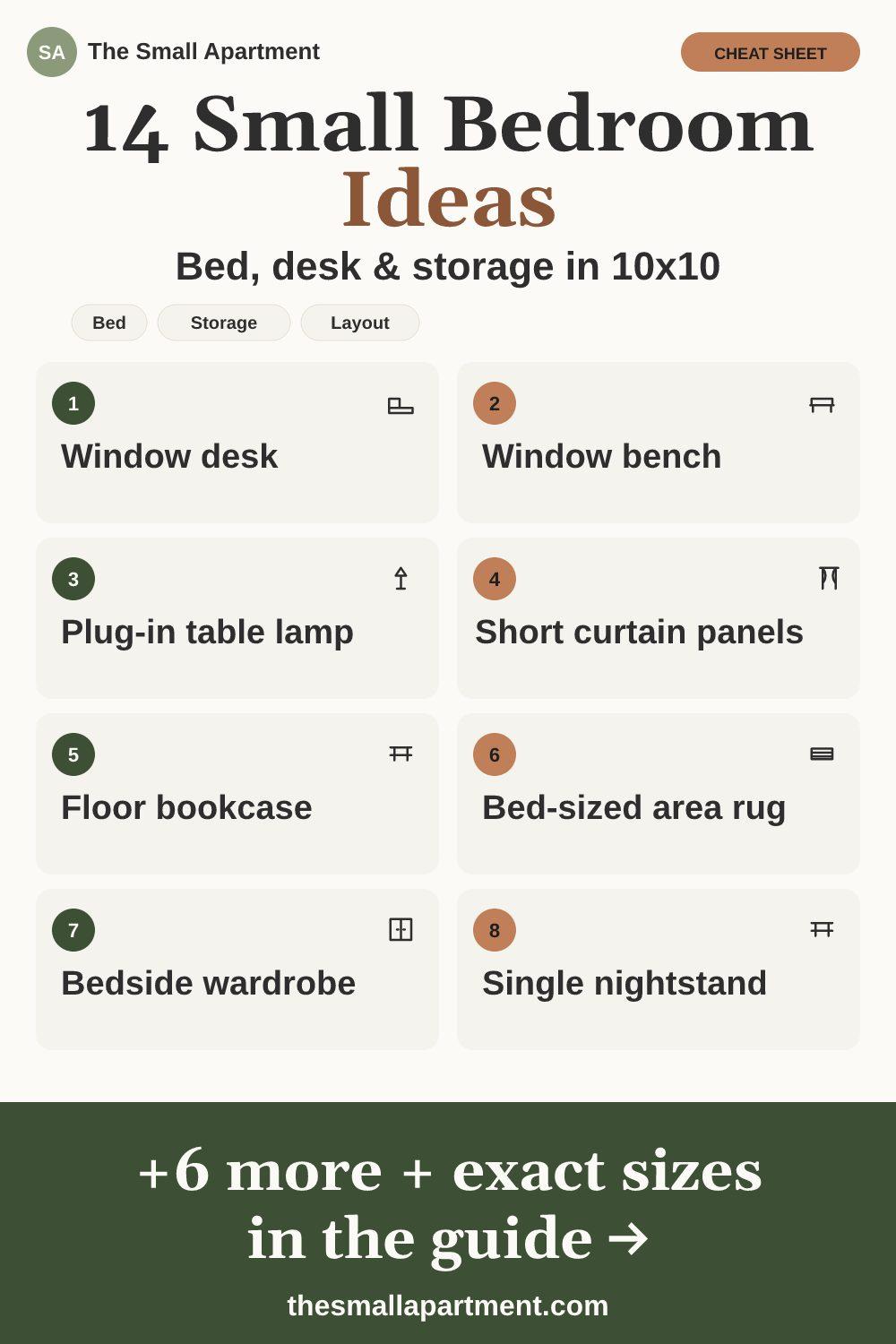
Small bedroom ideas for a 10 by 10 room start with one desk, one lamp, and a path you can walk. These 14 small bedroom ideas each name one thing to buy or one place to use, plus a size or a price. A second desk is the same idea twice, so it is gone. Check the rug size, the closet rod height, and a tension rod for the curtains before you order. Rough prices are 2026 shop ranges. If a piece does not leave a clear path beside the bed, it does not come home.
Budget Decor
14 Small Bedroom Ideas for Small Apartments
By The Small Apartment team · Published · Updated
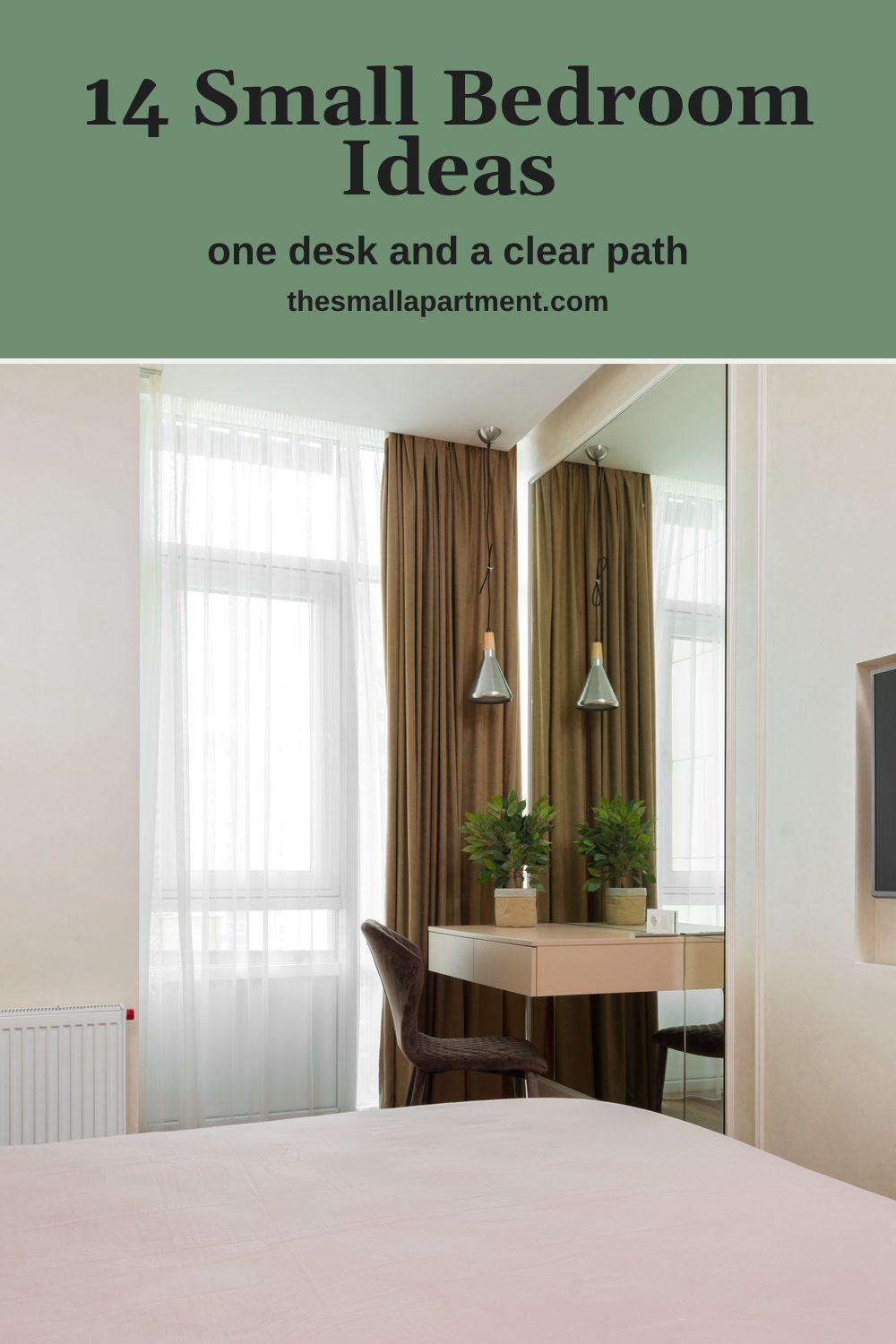
Key takeaways
- One desk at the window. A second desk is the same idea.
- A tall bookcase stands on the floor, so you do not drill a shelf.
- A bed frame with about 6 inches of clearance takes a box.
- An ottoman at the foot holds the bag that used to sit on the floor.
1. A desk at the window

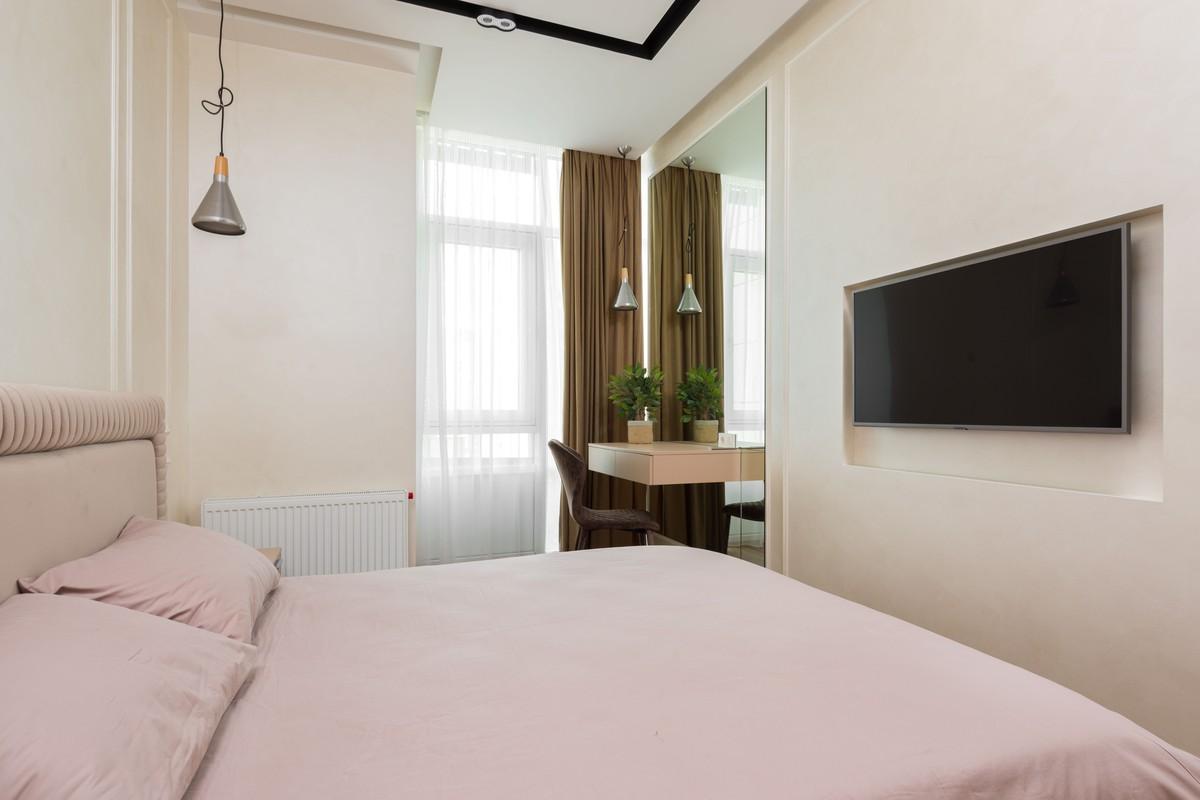
A desk at the window is the only work surface. A top about 40 inches wide and 20 inches deep, often $80 to $160, uses the light you already have and does not need a second lamp at noon. Put it on the wall that is not the bed wall. A second desk on the storage wall is the same piece twice, and a 10 by 10 room cannot spare the floor. The chair tucks under so the path stays about 24 inches. If the chair sticks out past the bed, the desk is too deep. Measure the wall before you order. The desk leaves when you move. Nothing is screwed into the sill.
2. A window bench, not a second chair

A window bench, not a second chair, is the seat for getting dressed. A bench about 36 inches wide, often $70 to $150, sits under the window and stays out of the path to the door. The desk already has a chair. A second chair is how the floor disappears. The bench can hold a folded blanket on top. Do not buy a chair that only faces the desk and a chair that only faces the bed. One seat that is not the desk chair is enough. Leave about 18 inches between the bench and the bed so you can still walk. It is freestanding, so it leaves with you.
3. One lamp on a small table

One lamp on a small table is the reading light. A plug-in lamp about 18 inches tall, often $25 to $50, sits on the nightstand and does not need a hole in the wall. A swing-arm sconce is a different product, and this room gets one lamp, not two. The ceiling light, if the rental has one, is the second source. You do not buy it. Put the lamp on the side of the bed you actually use. A pair of lamps is for a wider room. The cord runs along the baseboard, not across the rug. Unplug it when you move. That is the whole lamp plan.
4. Curtains that stop above the floor

Curtains that stop above the floor do not pool on the rug and collect dust. Hang the rod about 4 inches above the window frame, and hem the panels so they end about 1 inch off the floor. A tension rod, often $10 to $20, needs no screws, which is the renter note that matters. Measure the width inside the frame before you buy, because a rod that is too short falls. One pair of panels is enough. A second pair on a door you do not have is not an idea. The panels come down when you move, and the wall looks the way you found it.
5. A tall narrow bookcase on the floor

A tall narrow bookcase on the floor is the shelf you do not drill. A case about 12 inches wide and 60 inches tall, often $40 to $90, holds books and a few folded clothes and stands against the wall. A floating shelf needs screws and anchors, and a rental often treats those holes as damage. The bookcase uses the same vertical space and leaves when you move. Anchor it to the wall only if the lease allows a single screw. If it does not, choose a case that is deeper than it is tippy, about 12 inches deep. One bookcase. A second one is a wall of furniture.
6. One rug that stops before the chair

One rug that stops before the chair keeps the chair from catching the edge every time you stand. For a bed, a rug about 5 by 7 feet usually leaves a border of floor, often $40 to $120. If the desk chair's back legs land on the rug and the front legs do not, the chair rocks. Stop the rug before that chair. One rug is the idea. A runner plus a bed rug is two rugs, and the seam is a trip. Measure the path you walk at night. The rug should not reach the door swing. It rolls up when you move. No pad is required if the floor is already even.
7. A wardrobe wall beside the bed

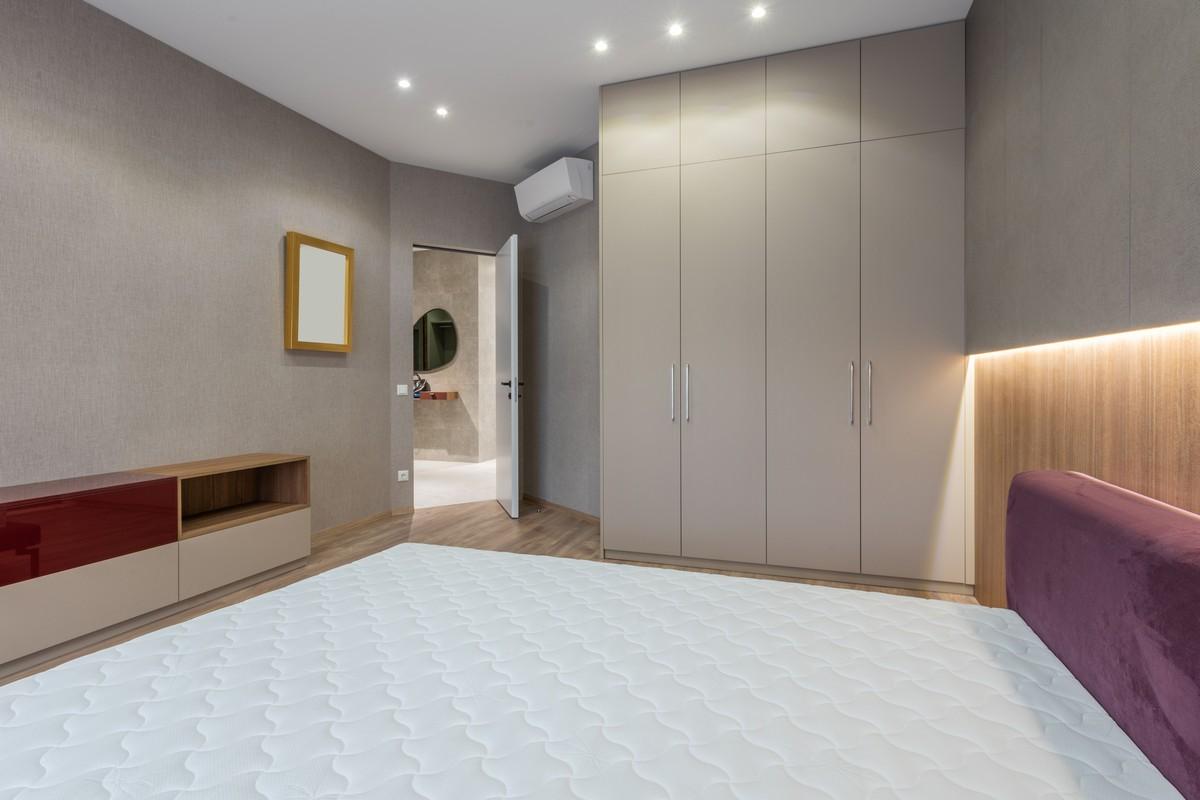
A wardrobe wall beside the bed is the hanging space when the closet is already full. A wardrobe about 36 inches wide, often $120 to $250, stands on the floor and does not need to be built in. Put it on the wall next to the bed, not in the path to the door. Leave about 24 inches to walk past the bed. The rod inside should sit high enough that shirts do not drag. Check that height before you buy a short case. One wardrobe. A second one turns the room into a closet you sleep in. It is freestanding, so it goes down the stairs when you leave.
8. One nightstand, not a pair

One nightstand, not a pair, holds the lamp and a book. A table about 16 inches wide, often $40 to $90, fits beside the bed without closing the path. A pair is the right call in a wider room, and it is the wrong call when the second table blocks the door. Put the one table on the side you get out of. The other side can be the wall. The drawer, if it has one, takes the phone charger. Do not add a stool on the empty side to "balance" the room. Balance is how the path shrinks. The table is light enough to carry. It is not bolted down.
9. A headboard you do not bolt to the wall

A headboard you do not bolt to the wall saves the plaster. A headboard about as wide as the bed, often $80 to $180, leans or stands on the frame and does not need anchors. A bolted headboard leaves holes you have to patch when you move, and many leases charge for that. Pick one that is the width of the mattress, not wider, so it does not stick into the path. You do not need it padded. You need it freestanding. If the frame already has a low headboard, do not add a second one in front of it. One headboard is the idea.
10. Sliding doors, not a door that swings

Sliding doors, not a door that swings, give back the floor a door arc uses. A swing needs about 30 inches of clear floor. A sliding door, or a door you can reverse to swing out, often costs $80 to $200 if you are allowed to change the hardware. In a rental, ask before you swap the door. If the lease says no, keep the swing and do not put the dresser in its arc. The idea is the clear floor, and the sliding door is the buy when you are allowed to change it. Do not add a curtain in the doorway as a second door. One way through is enough.
11. A bed frame with room for a box

A bed frame with room for a box is the storage under the mattress. Look for about 6 inches of clearance, which fits a box about 5 inches tall. Frames with that gap are often $150 to $300. A platform that sits on the floor looks tidy and stores nothing. Slide one or two boxes under the long side, not a pile you cannot pull out. The boxes are the storage. The frame is what makes them fit. Measure the clearance with a tape, not with a guess, because a 4 inch gap will not take a 6 inch box. The frame is freestanding. It comes apart when you move.
12. Woven baskets beside the bed

Woven baskets beside the bed catch the clothes that are not dirty enough for the hamper and not clean enough to hang. A basket about 12 inches wide, often $15 to $30, slides under the nightstand or sits at the foot if the ottoman is not there yet. One basket, or a pair only if they are the same product doing the same job in one spot. Do not add a second basket style across the room. That is two ideas that are one idea. The basket has handles so you can carry it to the closet on Sunday. It is not a laundry system. It is the spot for the in-between clothes.
13. An ottoman at the foot

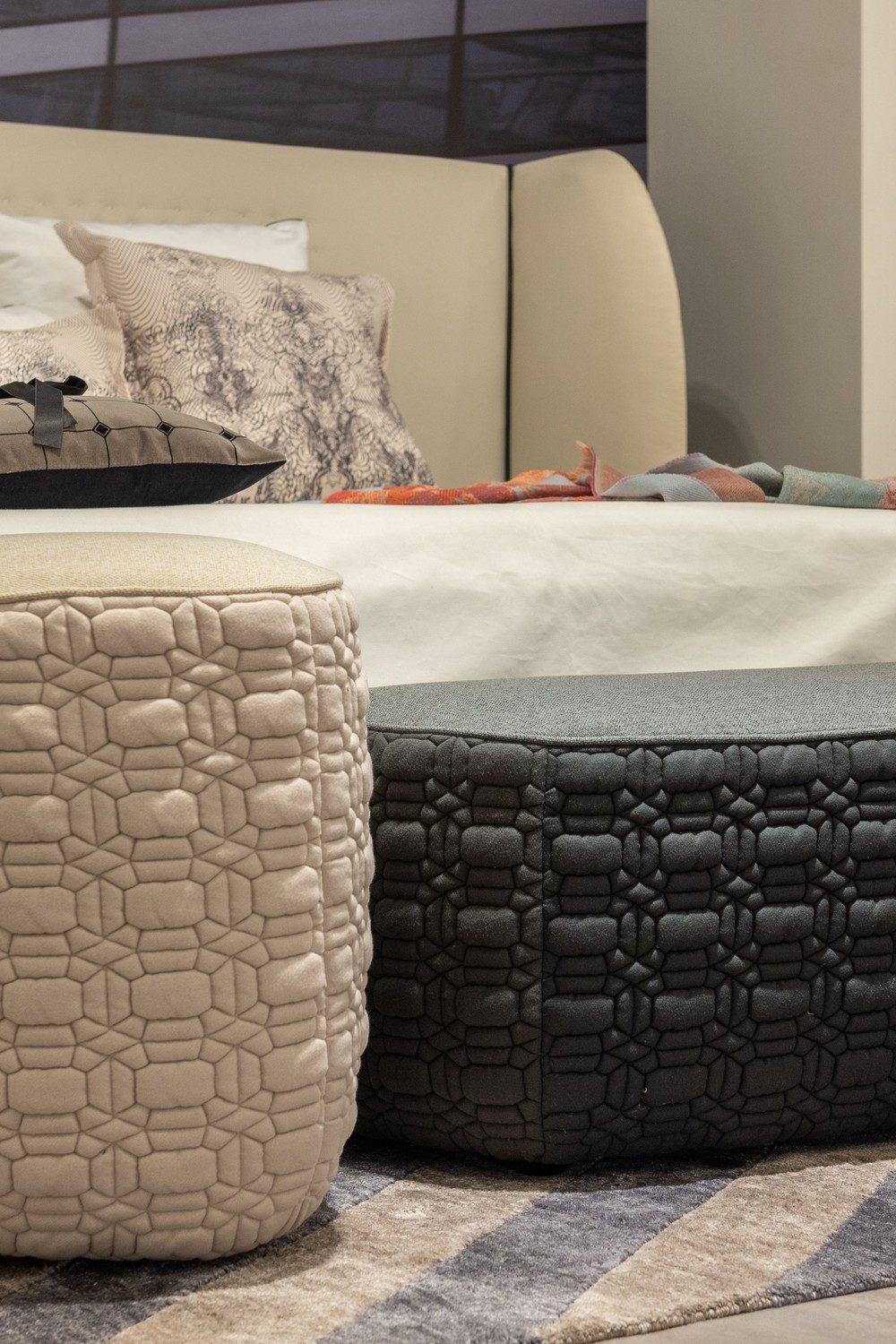
An ottoman at the foot holds the bag that used to sit on the floor. An ottoman about 30 inches wide, often $60 to $140, sits at the end of the bed and still leaves the path on the side. A lift-top version, if you buy one, stores a blanket inside. The one in a typical rental photo is a closed seat, and that is enough: the bag goes on top, not on the rug. Do not add a bench as well. The ottoman is the seat at the foot. Leave about 18 inches between it and the dresser so a drawer can open. It is light. You can carry it out.
14. A mirror on the dresser, not the floor

A mirror on the dresser, not the floor, is where you check an outfit without giving up walking space. A mirror about 20 inches wide, often $20 to $50, leans on the dresser or hangs on the back of the door if the lease allows one hook. A full-length mirror standing on the floor is a trip, and it blocks the path you measured for the rug. One mirror. A second one on the closet door is the same idea in a second spot. Put it where you already stand to get dressed, which is in front of the dresser. It comes down when you move, and it leaves no hole if it only leans.
Save for later
Frequently asked questions
- What furniture fits a small bedroom?
- One desk at the window, one lamp, one nightstand, and a wardrobe. Add a bookcase that stands on the floor instead of a shelf you have to drill.
- How do you add storage without a bigger closet?
- Use a bed frame with about 6 inches of clearance and slide a box under it. An ottoman at the foot holds the bag that used to sit on the rug.
- Can a renter hang curtains and a headboard?
- A tension rod holds the curtains with no holes. A headboard that stands on the floor does not get bolted to the wall.
Get the small apartment checklist
One short email a week with a small-space fix that actually works in a rental. You also get our printable room-by-room checklist. No spam, unsubscribe anytime.