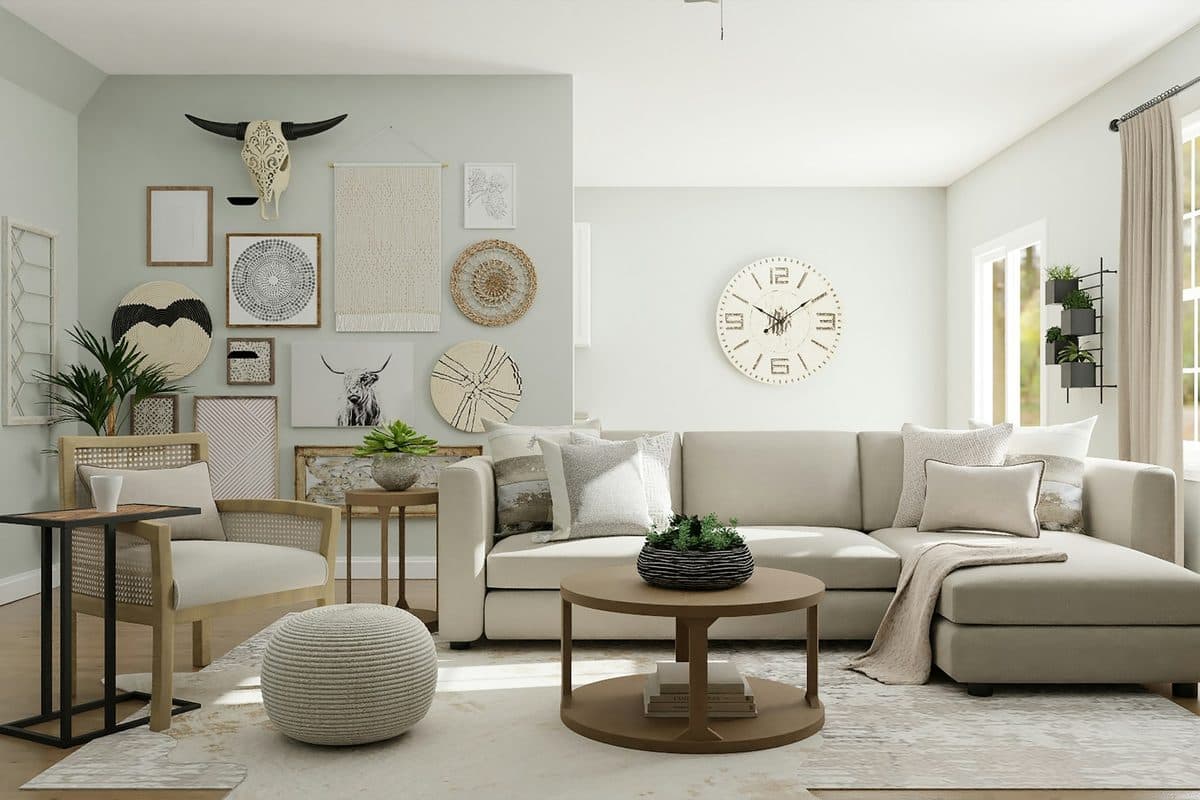
Small apartment living room styled on a budget with a rug, throw pillows, warm lamp light, and simple framed art. Photo via Unsplash.
Blank rental walls and a mismatched sofa can make even a clean apartment feel temporary. You do not need a full furniture replacement to change that. Budget apartment decor that looks expensive is mostly about a few high-impact layers—rug, light, textiles, and one clear focal point—chosen in one color story and scaled for a small room.
This guide gives under-$100 room plans (approximate USD) for a living room, bedroom, and entry, plus the shopping order that prevents random, cluttered buys. Prices are ballpark only; US big-box and UK high-street / charity-shop equivalents both work. Reuse what you already own first.
Lease-safe note: Prefer freestanding and removable ideas. Check your lease before nails, adhesive hooks, or peel-and-stick wallpaper. For weight limits on removable hardware, see renter-friendly storage without drilling.
Planning a wallpapered accent wall? Use the wallpaper calculator to count rolls before you buy, so you are not stuck with a spare roll or short one strip.
Costs are approximate ranges in USD.
Key to labels:
🏠 Renter-friendly / removable — easy to take with you.
Approx. — rough cost range in USD.
Key takeaways
Buy in this order: rug (or large textile), lighting, pillows/throws, then wall or shelf styling.
One cohesive color story beats lots of unrelated bargains.
Warm bulbs and a plug-in lamp often upgrade a room faster than new furniture.
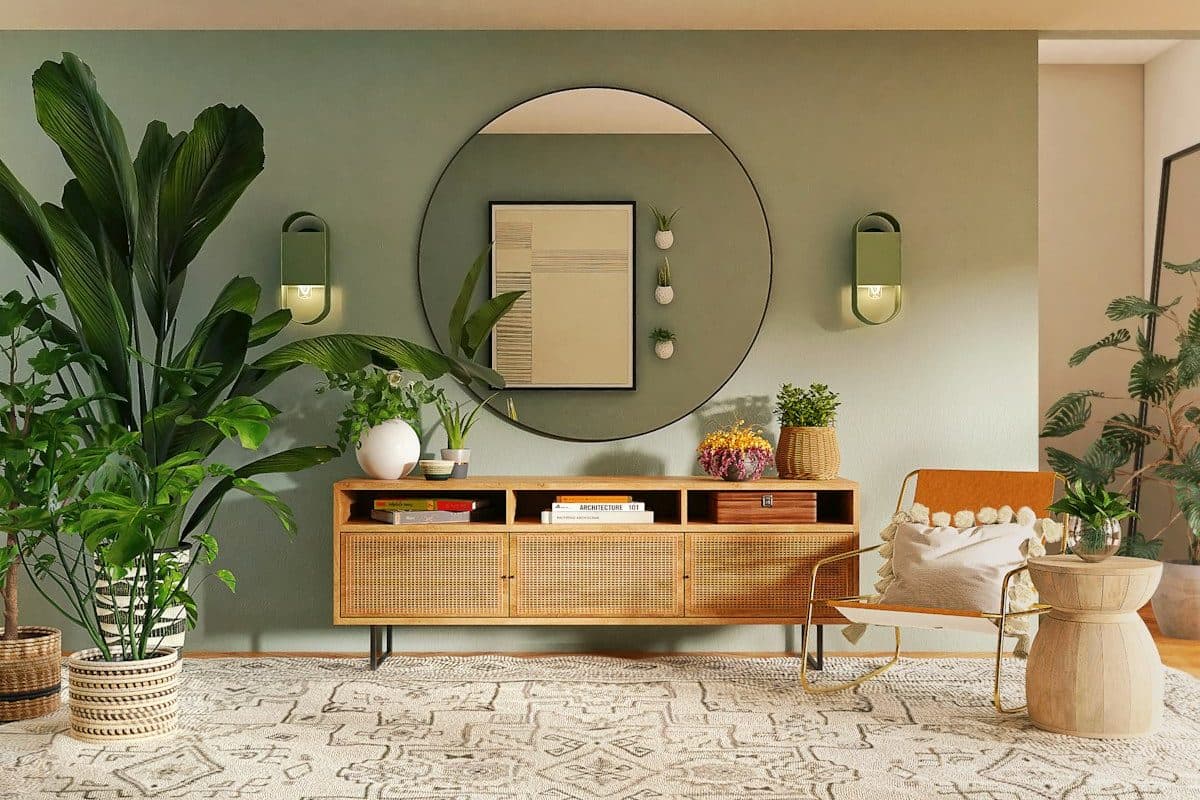
Large-scale art or a mirror reads as 'designed'; small clutter reads as busy.
Prefer freestanding and removable pieces so deposits stay safe.
Under-$100 plans are approximate—shop sales, thrift, and what you already own.
What Makes Cheap Decor Look Expensive?
Designers rarely rely on one “luxury” object. They rely on coherence:
A simple palette — two neutrals + one accent (for example cream, warm wood, and terracotta).
Larger scale — one bigger art print or mirror instead of twelve tiny frames.
Warm light — lamps with warm-white bulbs beat a single cold ceiling light.
Negative space — empty surface is part of the look; overcrowding reads as clutter, not wealth.
Budget: Spending $40 on a decent rug and $0 on trinkets usually beats $40 of small decor and a bare floor.
Renter tip: Style the sofa and coffee table before you touch the walls. Soft surfaces change photos (and daily mood) fastest. 🏠
What Order Should You Shop In?
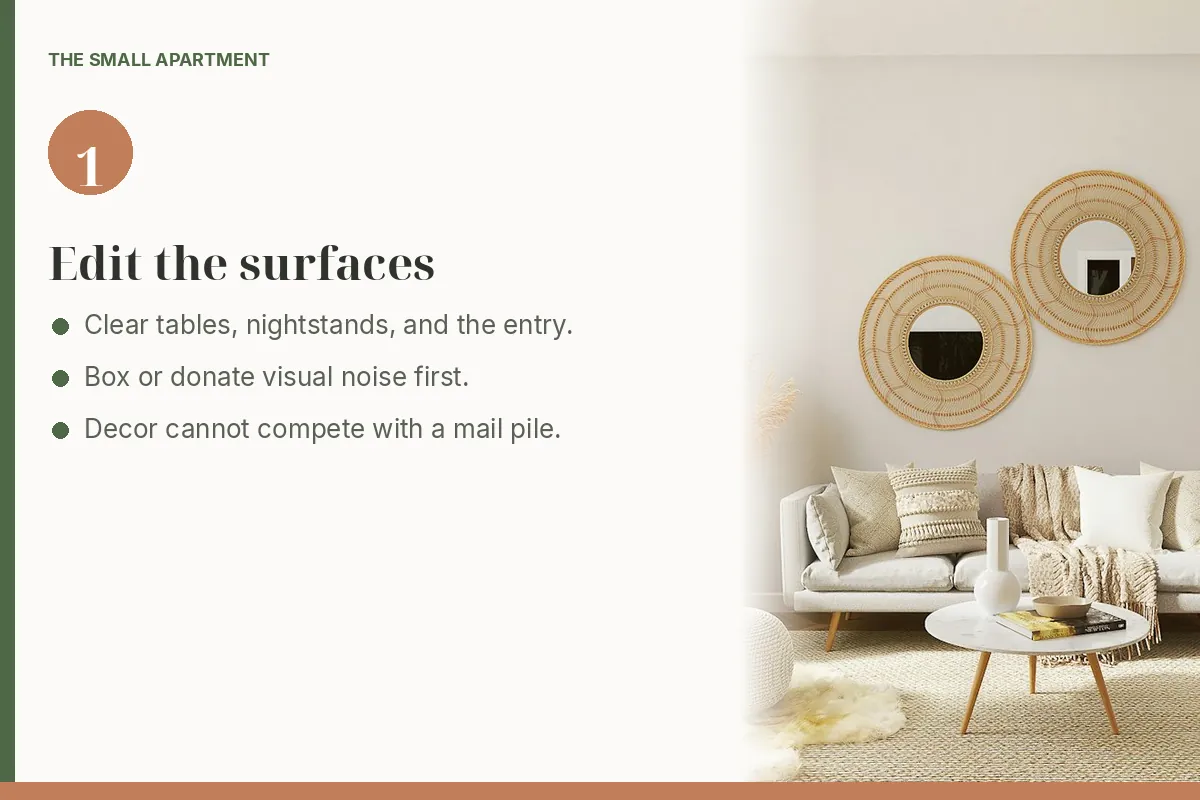
1Step 1: Edit surfaces
Step 1. Clear surfaces before you shop.
Clear the coffee table, nightstands, and entry catch-all. Donate or box visual noise. Decor cannot compete with yesterday’s mail pile. That edit is how to declutter a small apartment before the pillows go back.
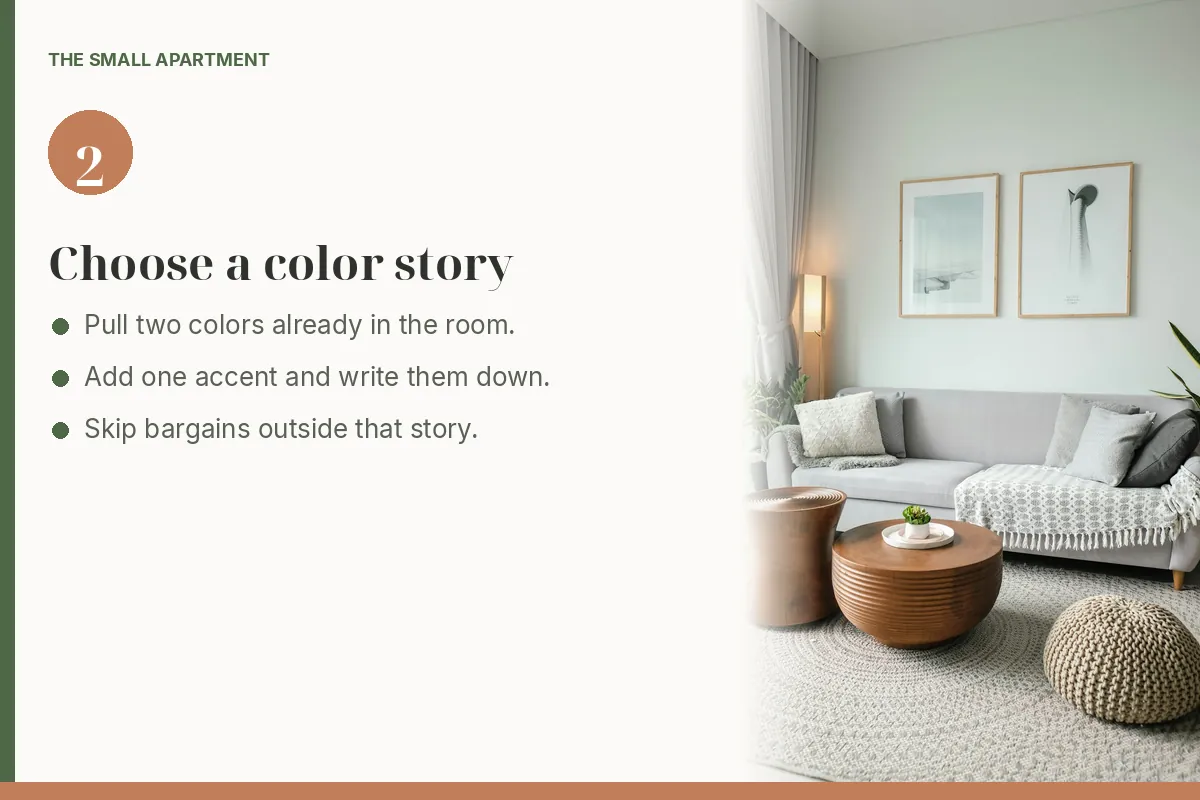
2Step 2: Choose a color story
Step 2. Pick two neutrals and one accent.
Pull two colors already in your sofa, floor, or curtains. Add one accent. Write them down and ignore bargains outside the story.
3Step 3: Soften the floor and seats
Step 3. Add a rug, pillows, and a throw.
Rug (or large textile), pillow covers, throw.
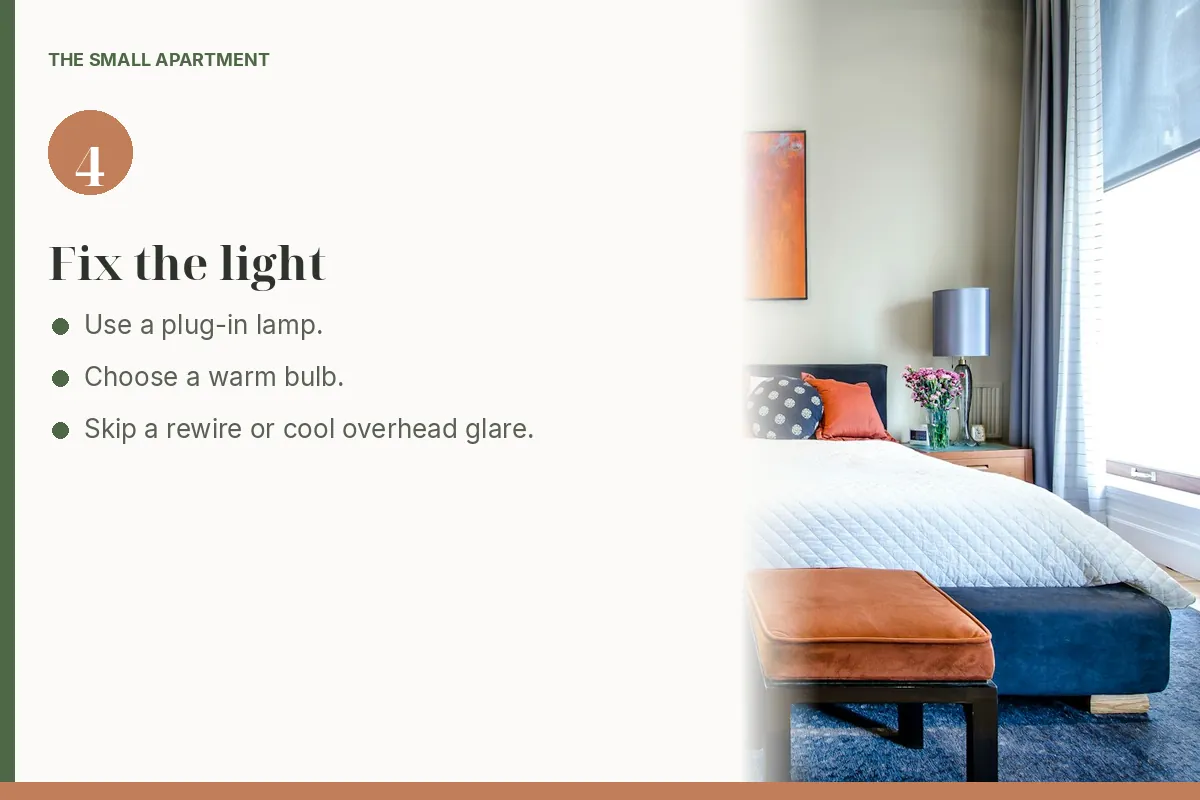
4Step 4: Fix the light
Step 4. Add warm light with a plug-in lamp.
Plug-in lamp, warmer bulbs, optional fairy lights on a shelf—not a rewire.
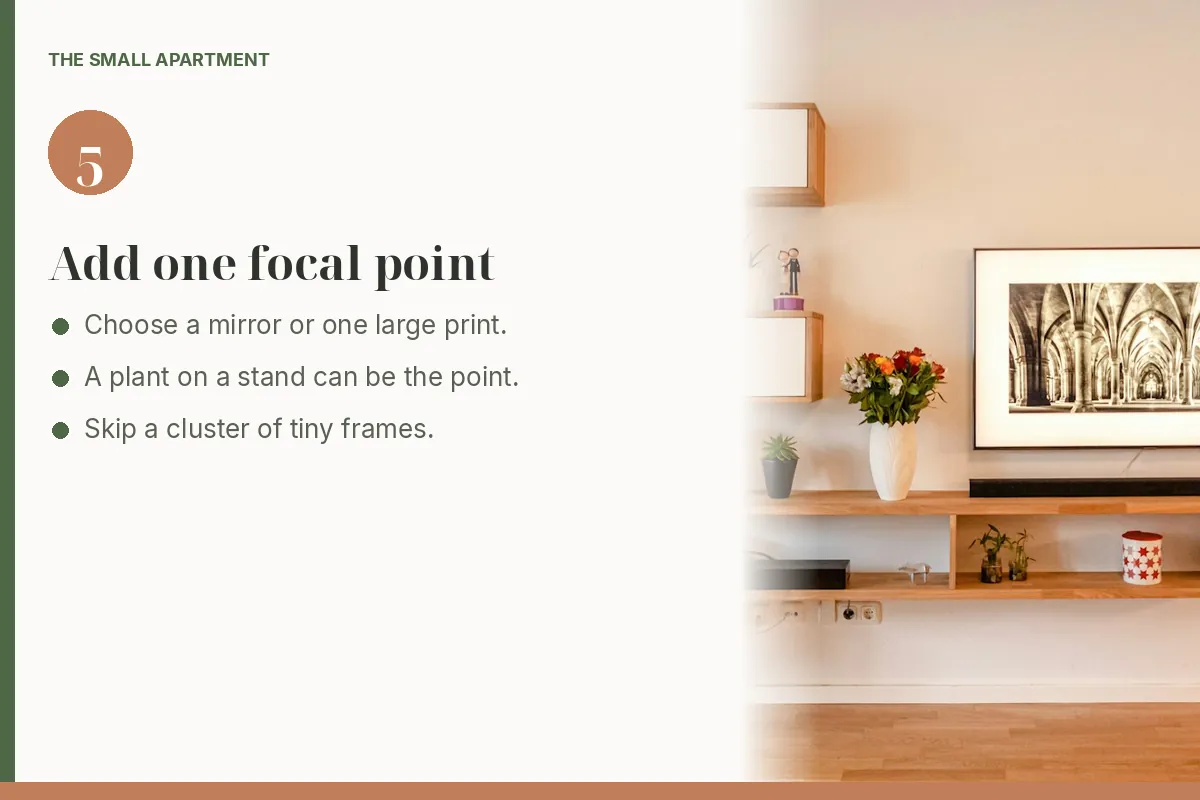
5Step 5: Add one focal point
Step 5. Add one large focal point, then stop.
Mirror, large printable art in a simple frame, or a plant on a stand.
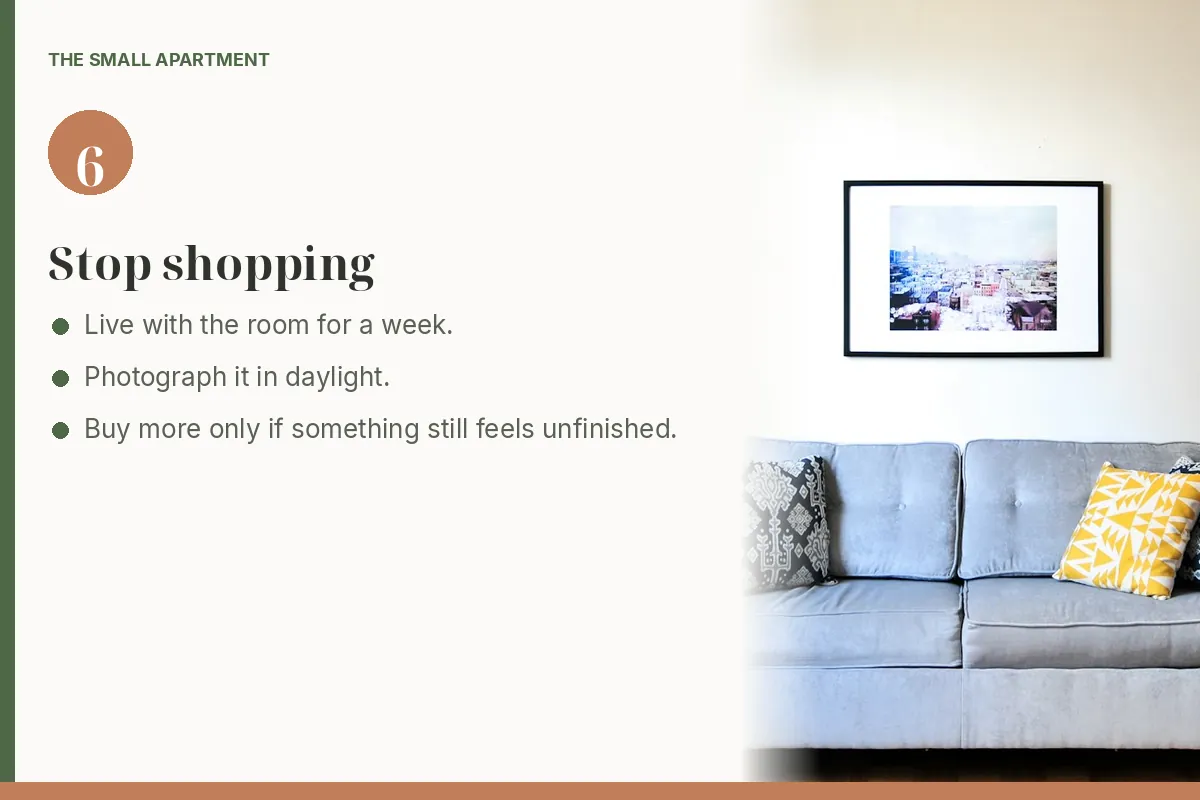
6Step 6: Stop
Step 6. Live with it for a week before buying more.
Live with it a week before buying more. Expensive-looking rooms know when to quit.
What Goes in an Under-$100 Living Room?
Place the sofa and the path before you shop. Small living room layout ideas covers walkways, the focal wall, and where the rug should sit. Assume you already have a sofa and a small table. Approximate stretch goal: about $100 for accents.
Item
Why it reads “expensive”
Approx. USD
Area rug (or large flatweave)
Zones the seating; hides tired flooring
$35–$60
2–4 pillow covers
Refreshes a sofa you cannot replace
$15–$30
One throw
Adds texture and a finished edge
$10–$25
Plug-in lamp + warm bulb
Layers light; softens overhead glare
$15–$35
Large art print + thrift frame or leaning mirror
Scale and focal point
$10–$30
Stretch total
Shop sales / thrift to stay near $100
~$85–$120
Living room styling rules
Let the rug front legs of the sofa sit on it if size allows—it looks more deliberate.
Stick to pillow covers in your palette; mix textures, not five competing patterns.
Aim lamps at walls or corners for glow, not harsh downlight on faces.
Stack two books + one tray + one object on the coffee table. Stop there.
Renter tip: Tension-rod curtains hung high and wide make windows look larger; thrift rods when you can. 🏠 Approx. $20–$50 if you need both rod and panels.
A calm bedroom is textiles + light + empty surfaces. Pair with storage habits from small bedroom organization so decor is not fighting laundry piles.
Item
Role
Approx. USD
Pillowcases / duvet cover refresh (or just shams)
Instant hotel-bed cue
$20–$45
Throw at the foot of the bed
Layered, finished look
$10–$25
Bedside lamp (or clip/plug-in)
Task light without overhead glare
$15–$30
Removable art or leaning frame
Focal point above bed or dresser
$10–$25
Small plant or bud vase
Soft life on the nightstand
$5–$15
Stretch total
Reuse hangers and baskets you own
~$60–$100
Bedroom rules that look costly
Matching pillowcases matter more than a perfect headboard.
Clear the nightstand to lamp, book, and one object.
Hide chargers in a small box or basket.
Avoid heavy adhesive shelves over the bed—safety first.
Budget: If bedding is already fine, skip it and put the money into a lamp and art. Light changes the “expensive” feeling after dark.
What Goes in an Under-$100 Entry?
Even a door wall can feel designed.
Item
Role
Approx. USD
Slim console, wall ledge, or sturdy stool
Drop zone that looks intentional
$0–$40 (thrift)
Tray or shallow bowl
Keys and wallet land in one place
$5–$15
Mirror (leaning or lease-allowed hang)
Light + last-look function
$15–$40
Small rug or runner remnant
Soft landing; defines the zone
$15–$35
Over-door hooks 🏠
Coats without drilling
$10–$25
Renter tip: If there is no foyer, use the first 60 cm inside the door: rug + hooks + bowl on a shelf you already own. Same idea as the entry drop zone in our organization guides.
Which Buys Actually Change the Room?
Spend type
Usually worth it
Often a trap
Textiles
Rug, pillows, throw, curtains
Tiny seasonal pillows in loud prints
Lighting
Warm bulbs, one good lamp
More ceiling glare; RGB gimmicks
Walls
One large art / mirror
Dozens of mini frames in mixed styles
Surfaces
Tray, 1–2 ceramics
Novelty figurines in every color
Greenery
One healthy plant
Five dying plants (stress, not luxury)
Thrift stores (US), charity shops (UK), op shops (AU), and marketplace apps stretch every plan. Look for lamps with solid bases, real wood frames, and baskets with intact handles.
All-steps checklist for an under-$100 apartment decor plan.
What Makes a Room Feel Finished?
Budget apartment decor that looks expensive is less about secret products and more about restraint: one palette, soft layers, warm light, and a single focal point. Start with the living room plan, keep receipts and packaging for anything removable, and stop shopping when the room photographs clean.
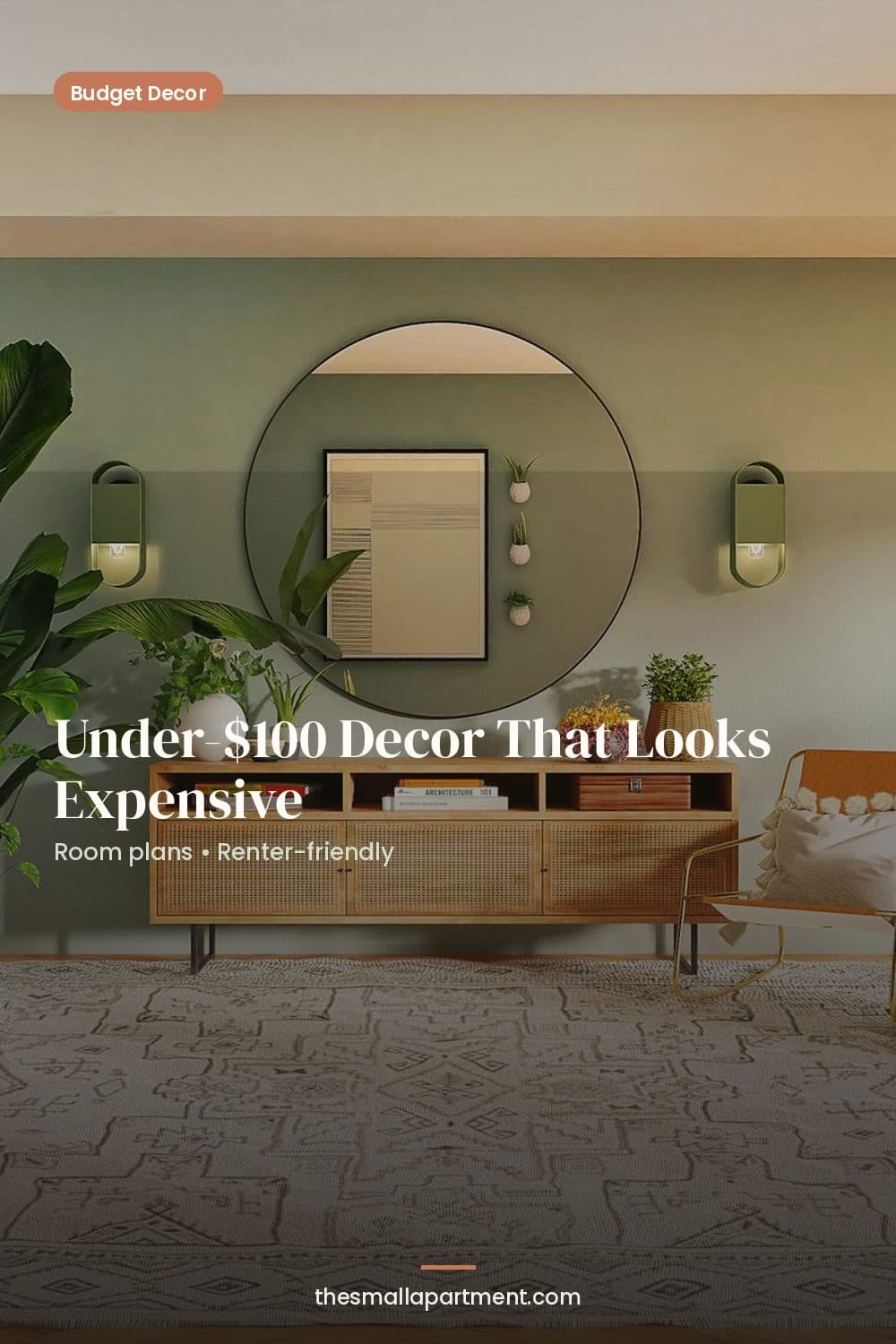
Pinterest pin: Budget apartment decor under $100 that looks expensive
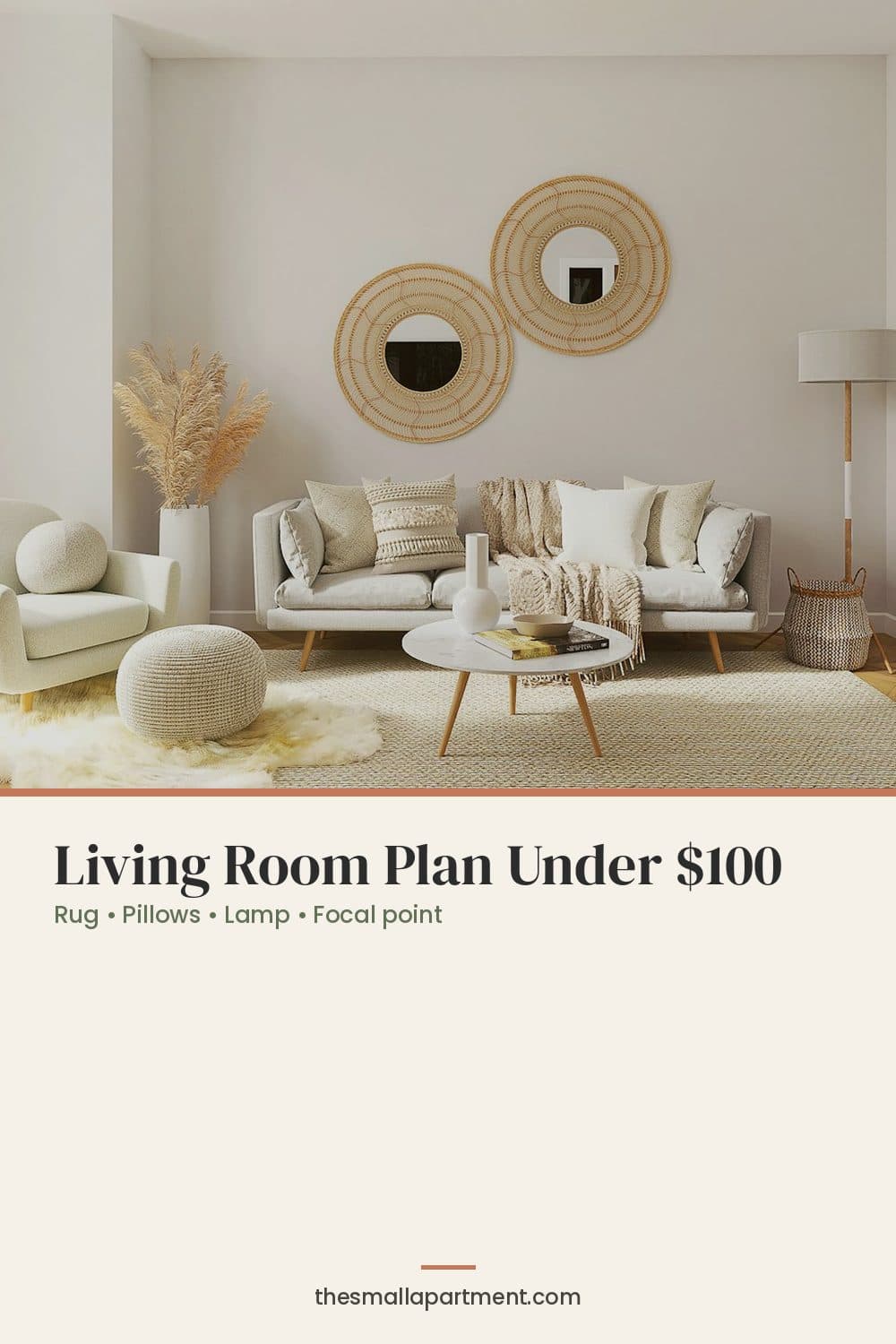
Pinterest pin: Under-$100 living room decor plan for renters
Frequently asked questions
How can I decorate my apartment on a budget?
Pick one room and one color story, then spend on high-impact layers: a rug, warmer lighting, pillows and a throw, and one large piece of art or a mirror. Shop thrift and sales for vessels and frames, and skip lots of tiny decor until the basics feel finished.
What makes budget decor look expensive?
Cohesion and scale. Matching a simple palette, repeating textures (wood, linen, ceramic), using larger art instead of many tiny frames, and adding warm layered light makes inexpensive pieces read as intentional.
What should I buy first for a rental living room?
Usually a rug (or a large throw if a rug will not work), then a plug-in lamp with a warm bulb, then pillow covers and a throw. Walls and small accessories come after the room feels soft and lit.
How do I decorate a rental without damaging walls?
Use freestanding lamps, leaning mirrors, tension-rod curtains, removable adhesive hooks rated for the load, and frames hung only if your lease allows small nails or adhesive strips. When in doubt, style shelves and surfaces instead of walls.
Can I decorate a room for under $100?
Often yes, if you already have basic furniture and shop carefully. Treat $100 as an approximate ceiling for accents—not a promise—and stretch it with thrift finds, sales, and reusing what you own. Exact prices vary by country and season.
What should I avoid buying on a tight decor budget?
Skip one-off novelty items in clashing colors, sets of tiny knick-knacks, cool-white bulbs that make rooms feel harsh, and anything that needs drilling if your lease is strict. Also avoid spending on more furniture before textiles and light are sorted.
Get the small apartment checklist
One short email a week with a small-space fix that actually works in a rental. You also get our printable room-by-room checklist. No spam, unsubscribe anytime.